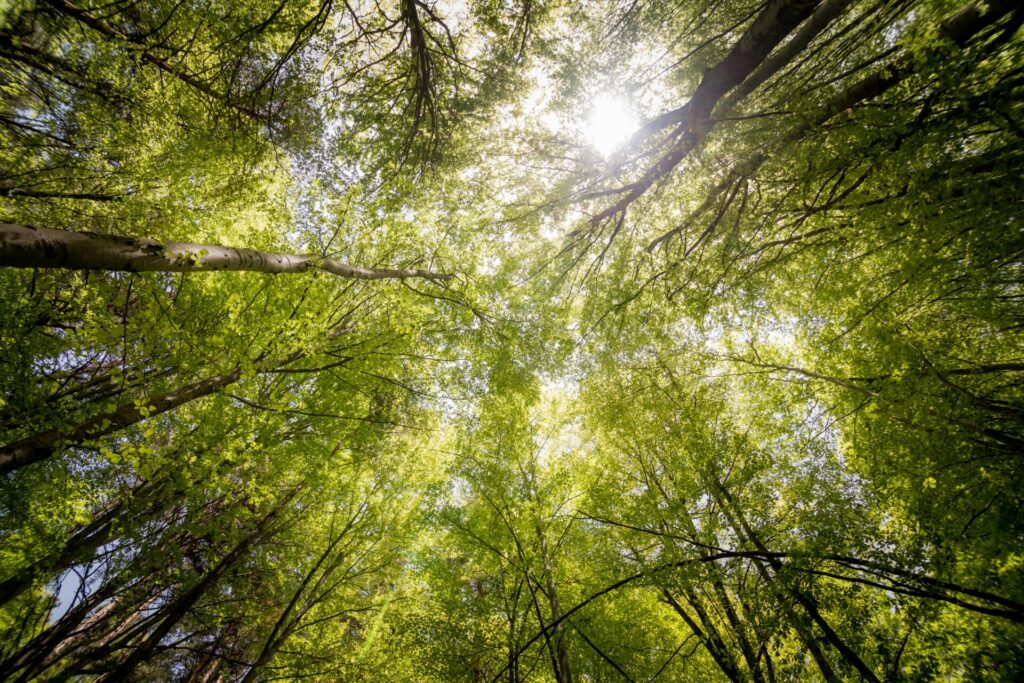
Trees for Pollinators
When we think about flowering plants and their role in supporting pollinators, trees are often overlooked. Instead, many people picture wildflowers blooming in open meadows or herbs like garden flowers. Yet, trees play an incredibly important role in supporting pollinators and other wildlife.
While most trees bloom for only a short period, they produce an abundance of flowers in that time, creating rich foraging opportunities for pollinators. Bees, butterflies, and other pollinators flock to trees in bloom, drawn by the high volume of nectar and pollen. This abundance is particularly beneficial because trees can sustain pollinators when other sources are scarce. For example, trees like willows bloom early in the season, offering vital food resources to pollinators emerging from winter dormancy. Some wild bees have developed preferences for certain types of trees. For example, the oak mining bee (Andrena ferox) frequently visits oak trees to collect pollen, while Clarke’s mining bee (A. clarkella) and the small sallow mining bee (A. praecox) like to forage on willows. These bees rely heavily on trees for their pollen so planting some is a sure-fire way to help our pollinators.
Beyond their role as a food source, trees provide critical habitats for a wide range of animals. Think of bats, which roost in the branches of trees, or birds that build nests in their limbs. Even the bark of trees serves as a home for many creatures. Insects and spiders can find a home in the crevices of the bark, and they in turn can be meals for birds like woodpeckers and treecreepers. As modern landscapes become increasingly fragmented, trees form important corridors for wildlife. Animals, including pollinators, use these lines of trees to navigate between habitats. Without these green corridors, many species would struggle to find food, mates, or shelter. Trees help connect ecosystems, allowing pollinators and other animals to thrive across larger areas.
Trees are perhaps not always appreciated but definitely missed when they’re felled. They capture carbon dioxide from the air, playing a critical role in reducing the impacts of climate change, and they provide oxygen that sustains life. Trees offer shade, cooling the environment beneath them and helping to reduce heat in urban areas. Forest bathing, the practice of immersing yourself in a forest, has been shown to be good for mental health. Trees promote tranquillity, making us feel connected to nature, enhancing our well-being and providing a peaceful escape from daily life.
This week is National Tree week and a perfect time to plant a tree. Do you have space for a tree? You can choose a suitable tree for your space from our list and plant it between autumn and spring, avoiding wet or frozen soil. Dig a hole three times wider than the rootball, soak the rootball, and position the tree at the correct depth. Refill the hole, water thoroughly, add mulch, and secure the tree with a stake. Regular aftercare, including watering and checking the stake, ensures the tree establishes well. For a more detailed guide, check the full article at the RHS website: How to plant a tree.