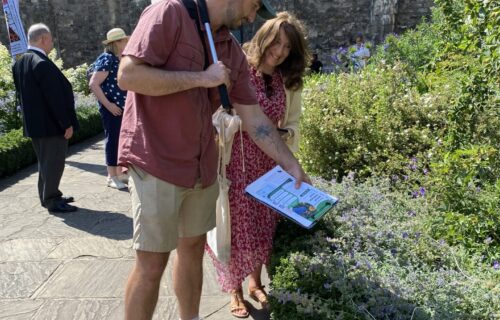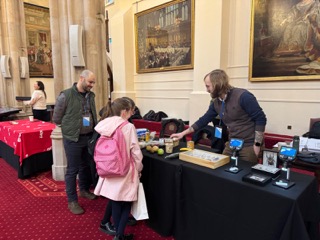
Earlier this month, we were excited to attend the Livery Schools Link event at the Guildhall in the City of London, where we met many young people with varying degrees of interest in environmental careers. It was inspiring to see many future ecologists, conservationists, and scientists eager to make a difference!
Many students asked how they could turn their passion for the environment into a careers, and the good news is that there are many different paths to explore. The skills required vary depending on the career path, but these three are particularly useful in ecology, but these three are particularly useful in ecology:
Identification skills: knowing what organism you’ve observing is key to protecting it. Often, the identifying pollinators specifically requires the use of dichotomous keys: books that help you identify the specimen by choosing option A or B regarding a visible trait, such as the colour and level of hairiness.
Data analysis: Many jobs in ecology require analytical skills using software such as R, SPSS, and/or GIS. The use of these programs are essential to interpreting the meaning and implications of your findings.
Communication skills: Groundbreaking research only has an impact if it is effectively communicate to a wider audience, including decision-makers. Developing strong communication skills is crucial for influencing policies and land-use planning.
Throughout the event, we had insightful discussions with students about different career opportunities in ecology. Some were interested in sustainable agriculture—helping farmers protect the environment while producing crops. Careers in agroecology focus on farming methods that support biodiversity and reduce pesticide use by introducing natural pest control solutions, such as parasitoid wasps.
New technology is alos playinh an exciting role in solving environmental problems. AI can be used to help people identify plants and animals in front of them using the camera in their phones. Audio sensors are being developed that identify the insects flying by based on the frequency of their wingbeats. These exciting projects all need people who have a keen interest in the natural world!
Ecology is a broad and exciting field with many career opportunities. Whether you want to work with wildlife, influence policy, or develop new technologies, there are many ways to make a difference. We had a fantastic time at Livery School’s Link, engageing with students and discussing their aspirations. We hope to see some of you working in ecology in the future. If you want to learn more, follow Pollinating London Together and start exploring how you can help protect your environment!