By Dr Martin Collins
We all love to see and hear bees buzzing around flowers, but it is easy to forget that other insects, collectively, are more important as pollinators, and these too should be encouraged. Butterflies immediately spring to mind, their size and coloration making them conspicuous visitors to flowers, but less obvious are the numerous species of their relatives, the moths. True flies, identified by having only one pair of wings, are also important pollinators. The small, black, hairy St Mark’s flies, as their name suggests, are common in spring, forming irritating swarms. Dung and blow flies are attracted to flowers emitting a foetid odour.
The most important family of pollinators, however, after wild bees, is the family of hoverflies, of which there are 283 British species. Many resemble bees and wasps, but they have only one pair of wings. They ‘hover’ over flowers, sometimes producing a high-pitched whine. The males are very territorial, chasing off rivals and returning to the same location. In one garden in Peterborough, 70 species were recorded. It is claimed they visit some 70% of animal-pollinated wild flowers.

Flies belong to a large assemblage of insects that include the butterflies, moths, beetles, ants, bees and wasps that have two main stages in their life history. The familiar adult is preceded by a larval stage with a very different appearance, habitat and food source. It is the larva that is the main stage in the life history; the adult stage usually being short-lived and devoted solely to finding a mate. Adult hoverflies live only a few days, or at most a few weeks. The implication is that with insects that have this life history, it is important to provide habitats and food for the larvae if the adult pollinators are to be encouraged. Hoverfly larvae feed on aphids, including aphids in galls. Some live in ants’ nests in soil, feeding on root aphids attended by ants. Others live in nests of bees and wasps, or feed on plants.
The largest single group of insects (in fact all organisms) in terms of species is that of the beetles. They have converted their fore-wings into hard, protective covers for the hind wings hidden beneath. Beetles were the first pollinators to evolve 160 million years ago with the first flowers and are still important pollinators for such ancient plants as magnolias. It has been estimated that they are responsible for pollinating some 88% of the 24,000 plant species. There are some very good ‘YouTube’ films of both beetles and hoverflies as pollinators.
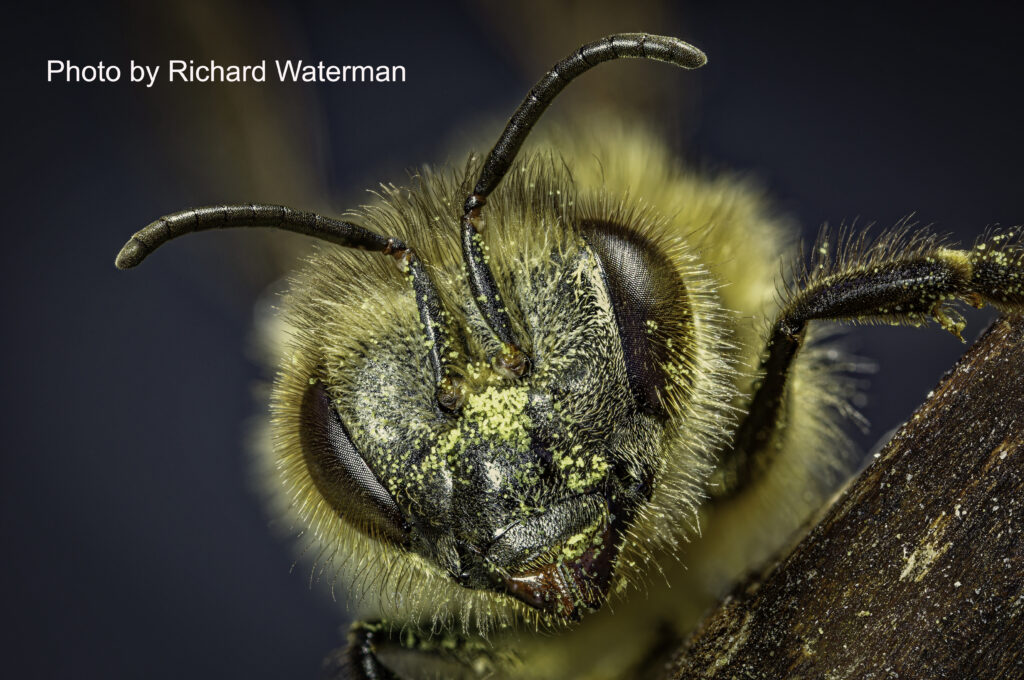
While planting flowering plants is important to maintain the diversity of insect pollinators, it is not enough. A diversity of habitats is needed to ensure the larvae as well as adult insects are appropriately encouraged.
Through its pollinator audit activities in City of London green spaces, PLT is helping to make available a range of healthy habitats for pollinators through all of their stages of life.
Dr Martin Collins