

Urban Pollinator Species Guide
Enhancing green spaces in London where all natural pollinators can thrive, and their habitats can be enjoyed by all.
Urban Pollinator Species Guide
Overview
Cities host a surprising diversity of pollinator species. Recognising common urban pollinators helps people understand which species they are supporting and why habitat diversity is important.
Common Urban Pollinators
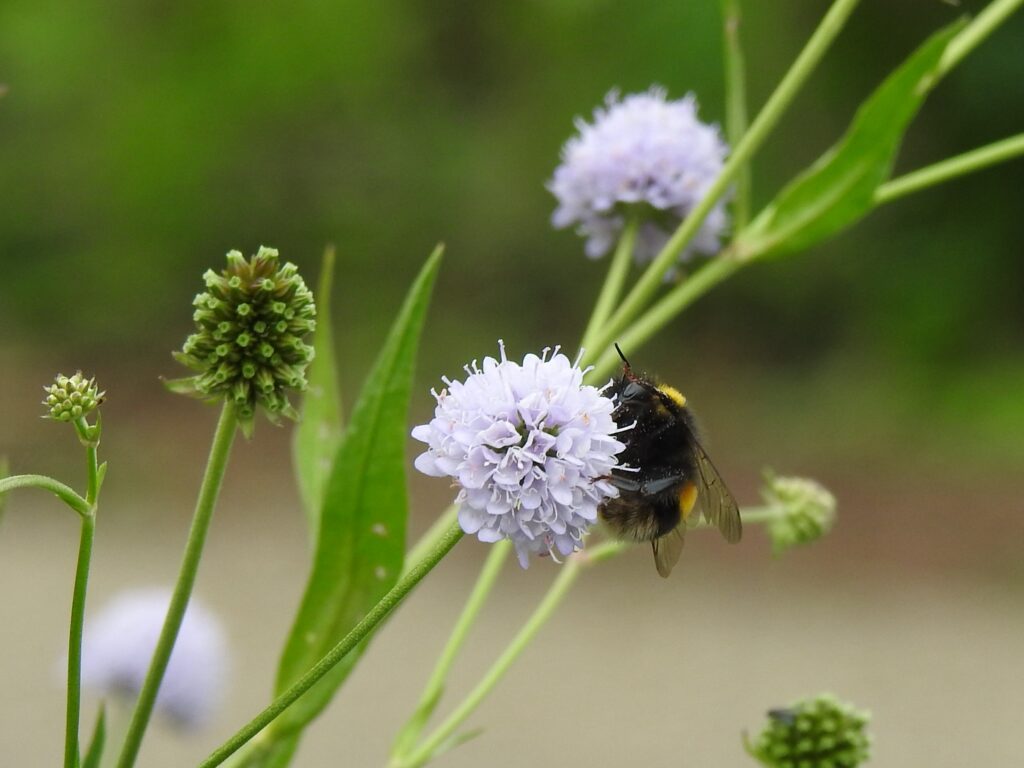
Bumblebees
- Large, furry bees with distinctive colouring
- Active in cooler weather than most other bees
- Nest underground in abandoned rodent burrows, or above ground in compost heaps, long grass tussocks, bird boxes and roof cavities — nesting location varies by species
Solitary Bees
- Non-aggressive and rarely sting
- Nest in soil, hollow stems, mortar cavities or purpose-made bee hotels, depending on species
- Extremely efficient pollinators
Hoverflies
- Many species mimic wasp or bee colouring, which can cause confusion
- Adult hoverflies are important pollinators, visiting a wide range of flowers
- Larvae of many common species are voracious aphid predators — it is the larvae, not the adults, that perform this pest-control role
Butterflies
- Pollinate while feeding on nectar
- Useful indicators of environmental health and habitat quality
Moths
- Primarily night-time pollinators
- Support plants that bloom after dark, including some that rely heavily on moth pollination
Beetles
- Among the earliest pollinators in evolutionary history
- Important for certain plant species, including some native wildflowers
- Generally less prominent in urban settings than bees and hoverflies
Why Species Diversity Matters
Different pollinator species:
- Prefer different flower shapes and structures
- Feed at different times of day and season
- Pollinate different plant species — often in ways other pollinators cannot
A diverse pollinator community produces a more resilient and functional ecosystem. If one species declines, others can partially compensate — but only if diversity has been maintained.
How to Identify Pollinators
- Observe flower visitors closely and at different times of day
- Photograph them for later identification
- Use field guides or smartphone identification apps
- Record sightings through citizen science platforms such as iRecord or the BWARS recording scheme
How to Support Multiple Species
- Provide varied plants with different flower shapes and sizes
- Include night-flowering species to support moths
- Maintain natural, undisturbed areas for nesting
- Offer diverse nesting habitats — bare soil patches, hollow stems, and log piles as well as bee hotels
- Avoid pesticides