

Trees for Pollinators
Enhancing green spaces in London where all natural pollinators can thrive, and their habitats can be enjoyed by all.
Trees for Pollinators
Why Trees Matter More Than We Think
When supporting pollinators, people often think of wildflowers or herbaceous garden plants. Trees are frequently overlooked. Yet trees are among the most important nectar and pollen sources in both rural and urban environments. Although most trees bloom for a relatively short period, they produce an enormous number of flowers at once, creating a concentrated and highly valuable food resource for pollinators.
Trees as Seasonal Lifelines
Many tree species flower early in the year, providing essential food for pollinators emerging from winter. Early-season tree blossom can sustain queen bumblebees and solitary bees when few other flowers are available. Key examples include:
- Willow (Salix species) — among the earliest and most valuable sources of pollen
- Hazel — another very early source, often flowering from January or February
- Cherry
- Hawthorn
- Apple and crab apple
Specialist Bees and Trees
Some bee species are closely associated with particular trees and depend on them for pollen collection. For example:
- The oak mining bee (Andrena ferox) collects pollen almost exclusively from oak trees. This species is relatively localised in the UK, occurring primarily in southern England.
- Clarke’s mining bee (Andrena clarkella) and the small sallow mining bee (Andrena praecox) forage primarily on willow.
Planting suitable trees helps support these specialist species and contributes to overall pollinator diversity. Even where specialist species are not present locally, the planting builds habitat potential for the future.
Beyond Nectar: Habitat and Connectivity
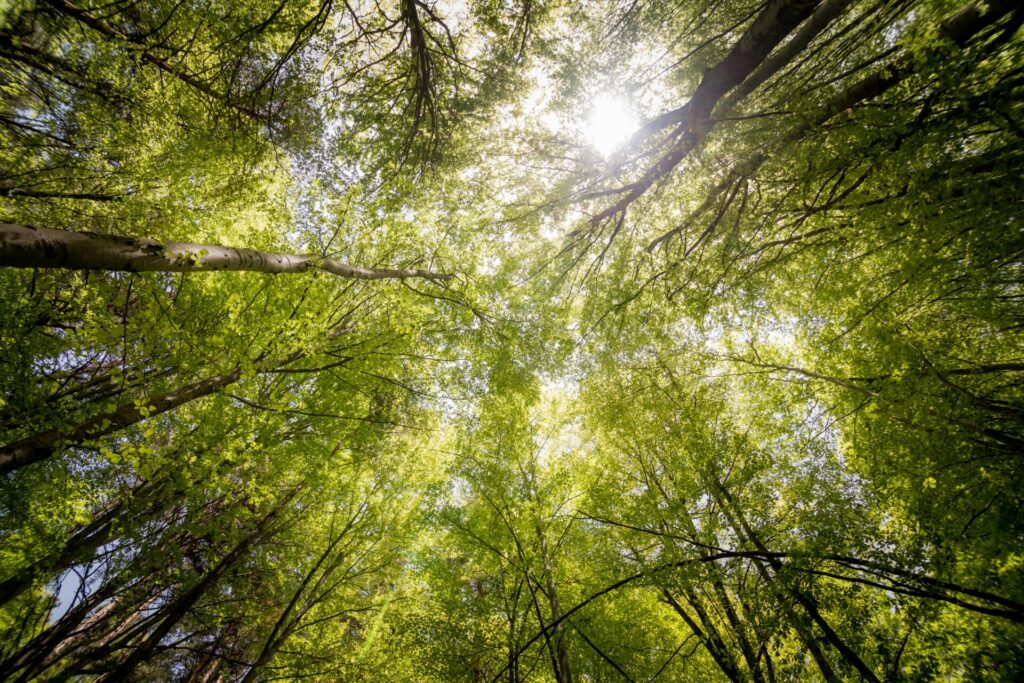
Trees support wildlife in multiple ways beyond nectar and pollen. They provide nesting and roosting sites, shelter from weather and wind, habitat for insects and spiders, and support food chains that sustain birds and bats. In fragmented urban landscapes, tree lines and green corridors allow pollinators and other wildlife to move safely between habitats, making trees essential components of urban pollinator pathways.
Urban Benefits of Trees
In cities, trees deliver wider environmental benefits that reinforce the case for integrating them into biodiversity planning:
- Carbon capture and long-term carbon storage
- Air quality improvement
- Shade and cooling during hot weather
- Reduction of the urban heat island effect
- Improved mental wellbeing for local communities
Planting Trees for Pollinators
Trees can be planted at any point between autumn and early spring, avoiding periods when the ground is frozen or waterlogged. National Tree Week (late November) is a traditional time to plant, but earlier in the autumn season gives trees more time to establish before winter.
Basic planting steps:
- Choose a species suited to your available space and soil type
- Dig a hole three times wider than the rootball
- Soak the rootball thoroughly before planting
- Position at the correct depth — the root flare should sit at or just above ground level
- Backfill, firm gently, water thoroughly and mulch
- Secure with a stake if necessary to prevent wind rock in the first year or two
- Provide regular aftercare — particularly watering — during the first growing season
For detailed guidance on species selection and technique, consult reputable horticultural sources such as the RHS or the Woodland Trust.
Key Takeaways
- Trees provide abundant nectar and pollen, often when other sources are scarce
- Early flowering species are especially valuable for emerging bumblebee queens and solitary bees
- Some bee species rely heavily on particular tree species for pollen
- Trees create habitat corridors in urban areas, enabling pollinator movement
- Tree planting supports both biodiversity and climate resilience