

Inner Temple Pollinator Forum
Enhancing green spaces in London where all natural pollinators can thrive, and their habitats can be enjoyed by all.
Inner Temple Pollinator Forum
Engaging Corporate and Civic Leaders in Urban Biodiversity
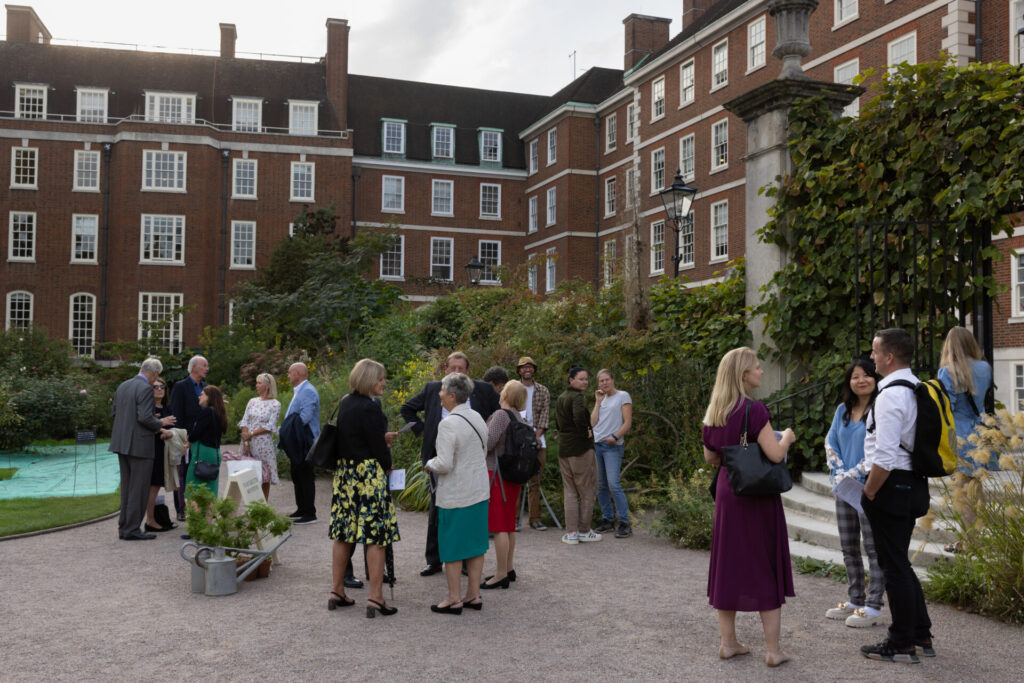
Pollinating London Together hosted an evening forum at Inner Temple Gardens, bringing together corporate partners, horticultural experts and supporters to explore the future of pollinator-friendly urban planting.
Inner Temple, with its long horticultural heritage and pollinator-friendly planting, provided an ideal setting to demonstrate how historic green spaces can function as urban biodiversity refuges.
Why Inner Temple Matters
Urban forage can be limited within dense commercial areas.
Sites such as Inner Temple provide:
- diverse flowering plants
- mature trees
- managed lawns and borders
- greenhouse cultivation
- habitat continuity within the Square Mile
These spaces play an important role in supporting pollinators within highly built environments.
The Programme
The evening included:
- Guided tours led by Inner Temple’s gardening team
- Ecological insights from PLT pollinator ecologist Dr Konstantinos Tsiolis
- Opening remarks from PLT Chairman John Burton
- Address from patron and horticulturalist David Domoney
Discussions focused on:
- pollinator-friendly planting
- corporate responsibility
- urban habitat limitations
- individual and organisational action
Partnership and Sponsorship
The event was generously sponsored by Gravis Capital Management, demonstrating the growing corporate interest in urban biodiversity.
Partnership with historic institutions such as Inner Temple strengthens cross-sector collaboration for pollinator conservation.
Impact Summary
- Corporate sponsorship secured
- Historic site activated for biodiversity advocacy
- Expert ecological engagement
- Senior horticultural patron involvement
- Increased corporate awareness
Strategic Significance
Urban pollinator recovery requires collaboration between:
- landowners
- businesses
- institutions
- horticultural experts
By convening stakeholders in influential settings, PLT helps embed biodiversity thinking into decision-making environments.