

Why Plant Diversity Matters for Pollinators
Enhancing green spaces in London where all natural pollinators can thrive, and their habitats can be enjoyed by all.
Why Plant Diversity Matters for Pollinators
Monocultures and Their Limits
Monoculture is the agricultural practice of growing a single crop across large areas. It is widely used in modern farming because it simplifies planting, harvesting and pest management. Machinery and supply chains are often designed around this efficiency.
However, monocultures can be ecologically fragile. A single pest or disease can spread quickly through genetically similar crops. For pollinators, monocultures also present a distinct challenge: unreliable and seasonally restricted food supply.
The Problem for Pollinators
Many crops flower for only a short period — sometimes just a few weeks. During that time, nectar and pollen may be abundant. Once flowering ends, those resources disappear entirely.
This creates several problems:
- Food is available only briefly, with long gaps before and after
- Alternative forage may be distant, particularly in landscapes dominated by a single crop
- Many solitary bee species forage within a few hundred metres of their nest; bumblebees may range further — often 500 metres to 2 kilometres or more, depending on resource availability
- Many species have short adult lifespans and cannot wait for the next flowering event
In addition, crop types and planting schedules often change year to year. This reduces the predictability that stable pollinator populations depend on.
Why Diversity Creates Stability
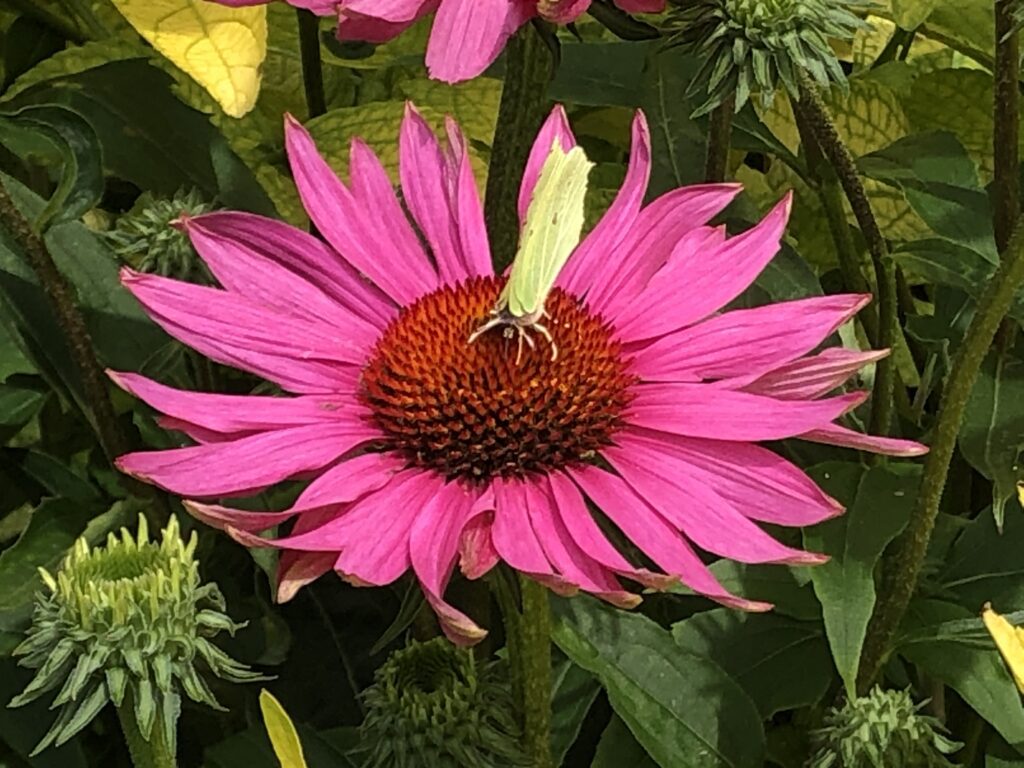
Pollinator ecosystems function best when there is a continuous and varied supply of flowers throughout the season. Semi-natural habitats such as hedgerows, field margins, wildflower strips and mixed planting schemes provide nectar and pollen across different times of year, supporting a wider range of species and helping maintain stable populations.
Co-Evolution: Why Different Bees Need Different Flowers
Pollinators and flowering plants have co-evolved over millions of years. Different bee species have adapted to different flower shapes — and this specialisation means that a diverse plant community supports more species than a uniform planting scheme ever could.
For example:
- Long-tongued bees, such as the garden bumblebee (Bombus hortorum), are suited to deep, tubular flowers like honeysuckle and red clover.
- Short-tongued bees, such as yellow-faced bees (Hylaeus species), prefer shallow, open blooms such as asters and umbellifers.
Plant diversity directly influences pollinator diversity.
What This Means for Urban Environments
Though monoculture is most often associated with farming, the same principle applies in cities. Large areas planted with a single ornamental species, uniform turf grass, or mass seasonal bedding offer limited ecological value. In contrast, diverse urban planting provides food across seasons, support for specialist species, resilience against environmental change, and improved overall biodiversity.
What You Can Do
Even small spaces can support pollinator diversity. Practical steps include:
- Planting a range of flower shapes, from open and flat to tubular and complex
- Choosing species that bloom at different times to maintain continuity across spring, summer and autumn
- Including native plants, which have co-evolved with local pollinators
- Avoiding pesticide use
- Leaving small areas slightly wild — unmown grass, bare soil patches or leaf litter all provide habitat
Balconies, gardens and allotments can all act as refuges within fragmented urban landscapes. Every patch of diverse planting contributes to a more resilient pollinator network.

Key Takeaways
- Monocultures create short, unpredictable food windows for pollinators
- Wild pollinators require consistent, diverse forage across the season
- Foraging ranges vary considerably between species — no single figure applies to all
- Different bee species need different flower types due to millions of years of co-evolution
- Plant diversity supports ecological resilience
- Urban planting choices directly affect local biodiversity