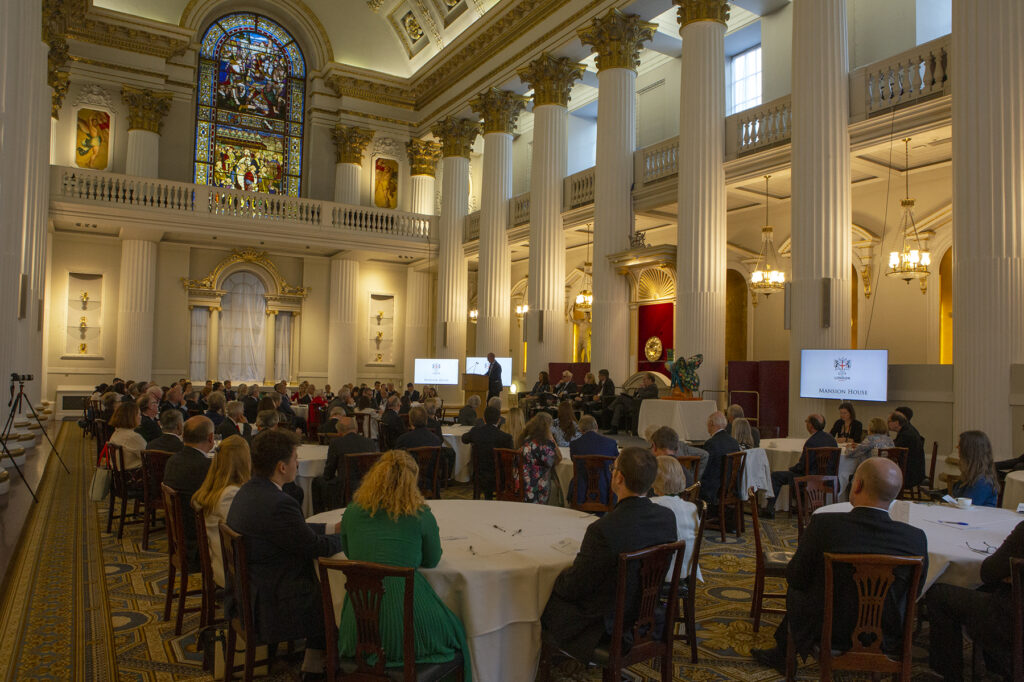
Pollinating London Together Mansion House 16th September 2021 Q and A
What can we do immediately?
Q What are the easy expectations that you would want us to take away to do? A as below
Q What should everyone do to make a difference for pollinators? A as below
Q What plants should be planted for encouraging other bees – not just honeybees? A as below
Response
Plant some of the below and try and get flowering from early Spring to late Autumn. Lavender is a good start. Make sure there is water for pollinators – some stones in a dish with water not quite covering them serves well. Don’t use pesticides. Don’t mow so often. Have a look at the videos for more ideas Videos – Pollinating London Together
Suggested pollinator-friendly trees and shrubs suitable for City sites. A list of suitable plants for urban areas can be found at https://www.pollinatinglondontogether.com/planting-guides/ (A longer list is available at: rhs.org.uk/plantsforpollinators)
10 favourite shrubs for urban areas that are easy to maintain is below. It includes plants that together would provide forage across the year.
WINTER flowering
Oregon Grape, Mahonia
Slender spikes of pale yellow flowers appear from November to March, above rosettes of large, handsome, dark green, holly-like leaves. The flowers have a sweet scent and provide a valuable source of nectar to pollinating insects in winter. Bunches of highly ornamental, round, deep purple berries will follow and will help attract birds. Although it prefers shade, it will tolerate sun as long as the soil remains moist.
Christmas Box, Sarcococca confusa and Sarcococca hookeriana
A compact, evergreen shrub up to 70cm high with glossy dark green leaves. The winter and early-spring flowers are small, creamy-white and very fragrant.
Deep red berries ripen to black in autumn and may persist into the following winter.
Laurustinus Viburnum Tinus
A particular favourite. It is a large evergreen shrub (up to 3m tall and 2m spread) with dark green, oval leaves and clusters of small, fragrant creamy-white flowers from late winter through to late spring. The berries are blue or black and appear in autumn and late winter.
Education
Q How can we deflect the ubiquitous “save the Bees” message from pointing uniquely at honeybees in the public’s mind? A as below
Q Are there too many honeybees in London? A as below
Q How can we communicate the value of “wild looking” pollinator friendly spaces vs highly manicured to the public? A as below
Q How do the speakers consider that we can best educate the current and future generations. A as below
Q How do we incentivise the population to react or respond to the crisis without excessive government interest of support? A as below
Q How do you get the message on individuals’ agenda – such as comic relief? A as below
Q How can we change the perception of the public ie their fear of “bugs” A as below
Response
Some of these are tough to respond to and not wanting to underestimate the difficulty – the answer may be education education education. Education can be formal and informal. PLT and others try hard with the informal education through our videos Videos – Pollinating London Together, our planting suggestions, newsletters, planting audits and blogs. The liveries work with a number of schools and our citizen science can be a good way in to talk about biodiversity and how to monitor pollinators. Other groups such as the Bumblebee Conservation Trust have a good schools programme and we would want to support those. There are too many honeybees in central London and with limited forage they will compete with our native pollinators. We always welcome suggestions from others.
Planning
Q Net Biodiversity Gain what would be a constructive follow up one liner?
Q What could we do to incentivise the greening/planting of rooves, verges and other horizontal surfaces?
A And walls too! The City Corporation’s Biodiversity Action plan encourages such an approach.
Q What incentives can public policy and public and private capital place on individuals to improve biodiversity in their area?
Q For the GLA every £ spent on green space delivers £27 in social value. How is this calculated?
Q Is there a list of places which could be sponsored for rewilding?
A Rewilding we believe comes in many different sizes! It might be a big estate BUT it could also be a corner of your garden where the vegetation is allowed to be natural…..give it a try and use the insect counting app to see the results!
Q Should the City be licensing beehives as the feelng is there are too many?
A The idea of adding more regulations causes concern BUT PLT is trying to broaden the knowledge so that people realise that the honey bees is one of nearly 300 types of bee…and that is before we start thinking about other pollinators!
Response
Building regulations are getting ever tighter for both new buildings and the minimum energy efficiency standards are impacting on existing buildings as will our responses, as a nation, to the Challenges of Climate Change. So alongside the benefits of preserving biodiversity, greening our urban areas will help with cooling and calming our neighbourhoods to the benefit of all. Biodiversity net gain is frequently part of planning requirements but as ever the devil is in the detail.
Measurement is an important issue.
For each £1 spent by local authorities and their partners on public parks,
Londoners enjoy at least £27 in value.
This investment is exceptional value for money, ensuring that London and Londoners benefit enormously from the city’s network of public parks. With such exceptional value, it makes sense to take care of the amount and quality of parks.
Natural Capital accounts for public green space in London a report by Vivid Economics for the GLA, National Trust and Heritage Lottery Fund, 2017, states:
1.2 Main findings
London’s public parks have a gross asset value in excess of £91 billion. This represents 30 years of value at £5 billion a year, appropriately discounted.
The value of parks reflects their general amenity, benefit to health and opportunity for exercise, and the value of recreation. Individuals, public services and businesses all benefit from public parks across the city. The composition of these benefits is shown in Table 1 by benefit type as well by beneficiary. Residents of London are the principal beneficiaries. In addition to this total value, it also helps us understand their value for money.
Specific PLT
- awareness raising and the involvement of partners through the City;
- the number of audits undertaken and subsequent improvement in planting from a pollinator perspective;
- improving pollinator populations as shown through the citizen science work;
- building bee corridors throughout and beyond the City.
Government
Q Everybody pays taxes what carrot can we use? A as below
Q What pressure can be applied to local authorities to have tree lined streets? A as below
Q How widely from a government perspectives has the power of gardening, biodiversity and green space been advertised to the general public? A as below
Q How do you square the attempts to increase biodiversity in London with the possible ambitions of the government to develop the greenbelt? A as below
Q How do we continue to build more houses and sustain biodiversity? A as below
Response
PLT will play its part in informing those in a position to influence policy. Good to have the support of the Rebecca Pow MP Parliamentary Under-Secretary, the Lady Mayoress and Andrew Jones of the GLA at our event. City of London Corporation through Open Spaces and Planning are making progress in protecting and enhancing green space. PLT continues to build its contacts in order to spread the word. It is down to all of us to share what we learn, practice what we preach and use our own contacts with our own local politicians.