City Walk and Netting with Renaissance Foundation
As part of Pollinating London Together’s (PLT) educational outreach, we have been working with the Renaissance Foundation.
The Renaissance Foundation is an organisation dedicated to empowering young carers and patients to reach their full potential and embark on their own journeys, with a vision that no young person should be held back because of their caring responsibilities or health condition.
By offering a range of programs, the foundation aims to inspire and support these individuals, fostering resilience and ambition. Through initiatives such as workshops, creative projects, and excursions, participants gain valuable skills and experiences that help build their confidence and expand their horizons. The foundation’s holistic approach ensures that each young person receives tailored support, helping them overcome their difficulties and achieve their full potential.
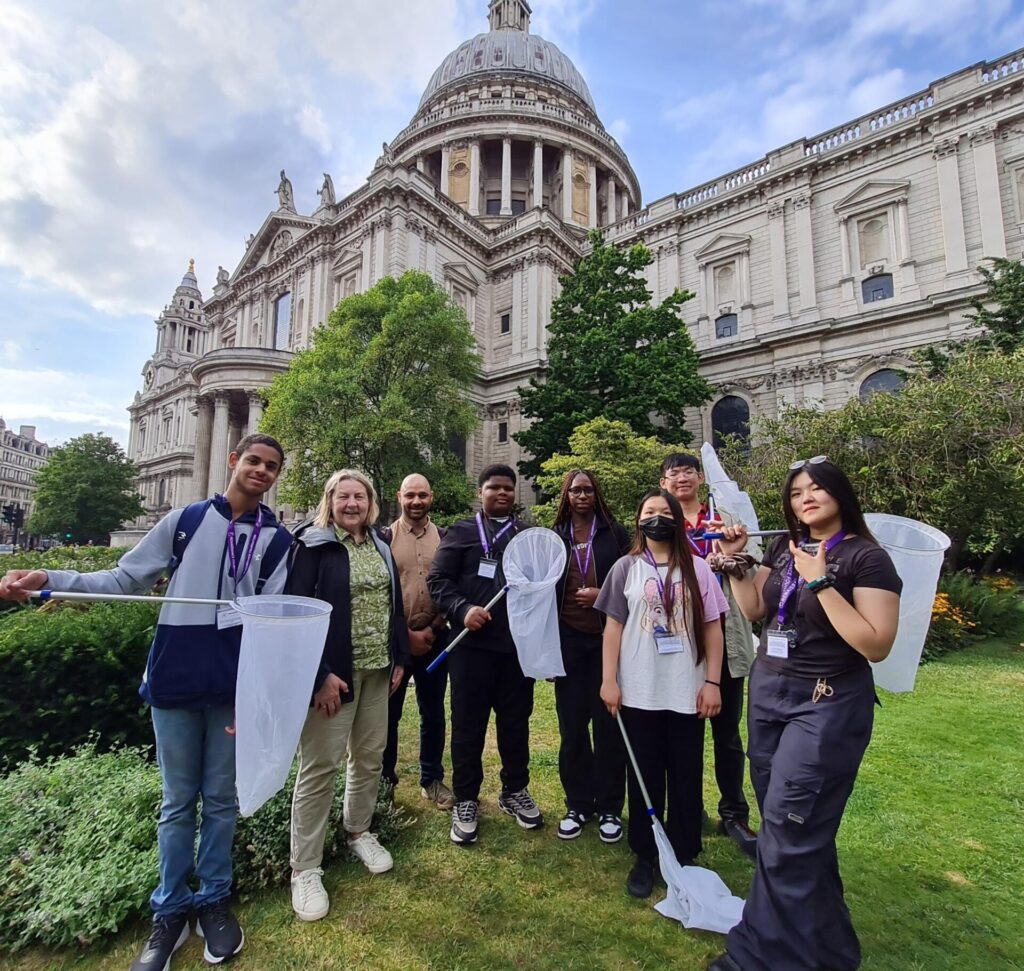
PLT had organised a meeting with the Renaissance Foundation at the beginning of August. Despite the last minute changes in the weather forecast and the looming threat of rain, a group of about twelve of us gathered at St. Paul’s Station, determined to embark on a garden exploration to find some of the many pollinators that can be found in the City of London.
Our destination list included some of London’s lesser-known but historically rich gardens: Greyfriars, Postman’s Park, Plaisterers’ Hall, and St. Mary Stainers.
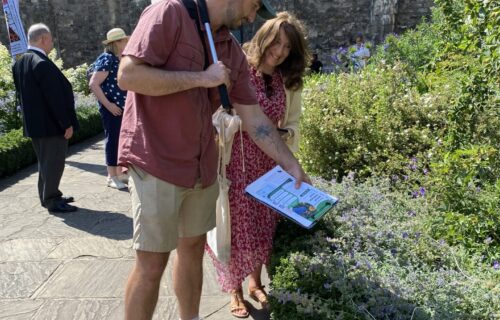
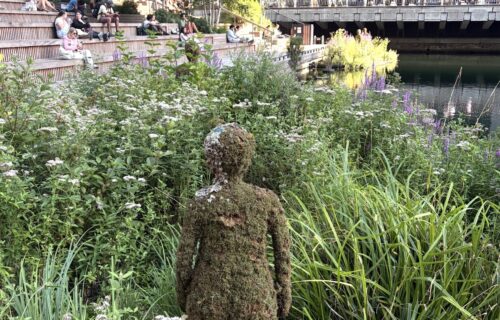
As we set off under a steady drizzle, the weather failed to dampen our spirits. Heather and Konstantinos guided the group from Renaissance along with Hannah, Renaissance Foundation Programme Director and Corey, Renaissance Foundation Programme and Digital Content Manager. They kept the group engaged with fascinating factoids and information about pollinators and their habitats, making the walk through the rain both informative and enjoyable. The gardens, though lacking their usual activity of pollinators due to the weather, still offered plenty of interest in the variety of planting and horticulture. The greenery and historical significance of each garden added to our experience.
By the time we reached the crypt of St. Paul’s Cathedral, we were in need of a break. The crypt provided a warm and dry stop where we could relax, enjoy a drink, and dry out a bit. Our discussions here turned to pollinators and potential career paths in environmental science. The group was full of curiosity, asking great questions and sharing valuable insights, making the conversation lively and enriching.
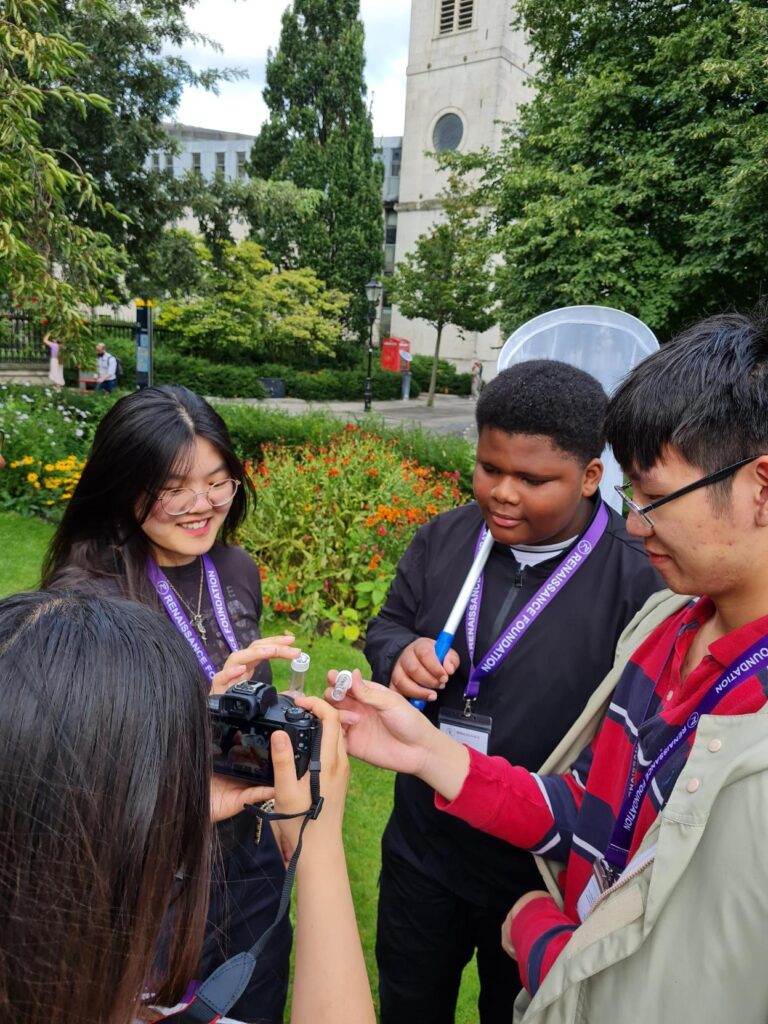
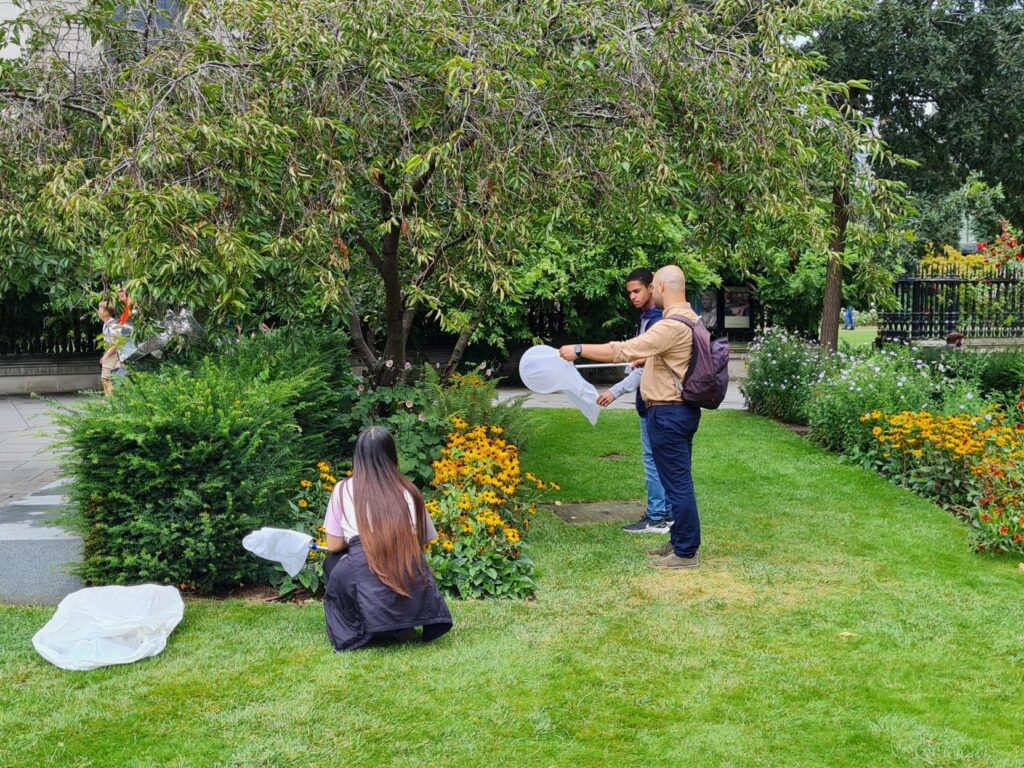
When we emerged from the crypt, the rain had ceased, and the sun began to peek through the clouds. Seizing the opportunity, we headed to Festival Gardens. Here, much to the amusement of onlookers at the nearby bus stop, we began our pollinator-catching session. The Renaissance members quickly mastered the technique of catching pollinators in nets and placing them in tubes for closer observation. This hands-on activity allowed us to observe and experience the delicate creatures up close before releasing them back into the garden.
Our time in Festival Gardens also highlighted the impressive photography skills of the Renaissance members, who captured stunning images of the pollinators. Their enthusiasm and quick learning added an extra layer of excitement to the day’s activities.
Despite the initial rain, our garden tour and pollinator netting turned out to be a memorable and educational adventure. The combination of historical exploration, hands-on learning, and lively discussions made it a day to remember.