How Healthy Are London’s Pollinators?
Pollinators are essential to healthy ecosystems and food production. But how are they actually doing in London? That’s the central question behind Pollinating London Together’s ongoing monitoring work. To answer it, we are asking something quite simple, but surprisingly difficult to pin down: which pollinator species are present in London’s green spaces, and in what proportions? Understanding this matters because a healthy pollinator community is diverse, with many different species playing different roles. And should one species disappear for some reason, other species with a similar role could fill the gap they leave. Without good data on what’s out there, it’s impossible to know whether urban green spaces are supporting that diversity.
How do we measure pollinators?
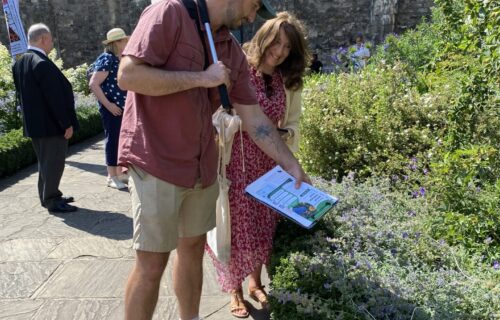
We mainly do this with pollinator transect surveys. Imagine a fixed line through a green space that a surveyor walks at a steady pace. As they walk, they record all insects seen actively visiting flowers within a set distance. Crucially, we only record insects that are interacting with flowers. A bee flying past, or a butterfly just passing through, doesn’t count. This ensures the data reflects pollination activity. Transect surveys are widely used because they are repeatable and comparable over time. By walking the same routes in the same way, year after year, we can start to see meaningful patterns.
Where do we survey?
London is not one uniform habitat, so our survey sites reflect that. We monitor a wide range of green spaces, mostly within the Square Mile and surrounding areas of the City of London. These include large urban parks, churchyards, burial grounds, rooftop gardens, and private wildlife gardens. Each of these spaces offers different resources for pollinators, and part of the aim is to understand how size, location, and management affect which species can survive there.
When do surveys happen?
Pollinators are only active at certain times of year, and many species have very short adult lifespans, sometimes just a couple of weeks. On top of that, different species emerge at different times. To account for this, surveys are carried out in multiple rounds across the season. Every site is surveyed once per round, with several surveys during key periods from spring through to late summer. This approach helps us capture the full range of pollinators using a site, rather than missing species that are active outside a narrow window.
What are we finding so far?
The data gives us valuable insights into which pollinators are currently using London’s green spaces, and how. However, pollinator population dynamics operate at large spatial and temporal scales. The effects of habitat changes or management interventions often take years to show up. That’s why long-term monitoring matters. The more years of consistent data we collect, the more confident we can be in identifying trends rather than noise. One important result so far is the overwhelming dominance of honeybees in many survey sites. We are finding a lot of them, often far more than is sustainable in dense urban environments. This matters because honeybees compete directly with wild pollinators for food. A honeybee colony can forage up to ten kilometres from its hive, while most solitary bees travel less than one kilometre from their nest. Solitary bees therefore have far fewer feeding options, especially in fragmented urban landscapes.
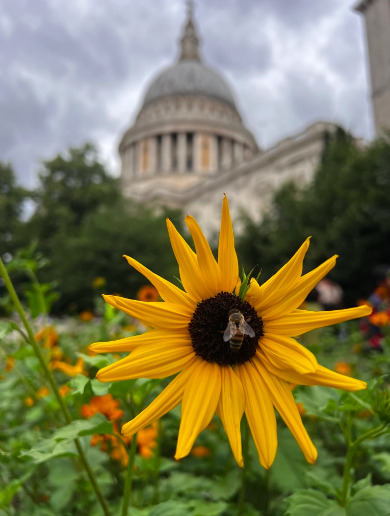
Honeybees also live at very high densities and are more prone to disease. These diseases can be transmitted to wild pollinators via shared flowers. Quite literally through honeybees defecating on them. Despite common perceptions, honeybees themselves are not in the same level of peril as wild pollinators, largely because they are actively managed by beekeepers.
Reasons for optimism
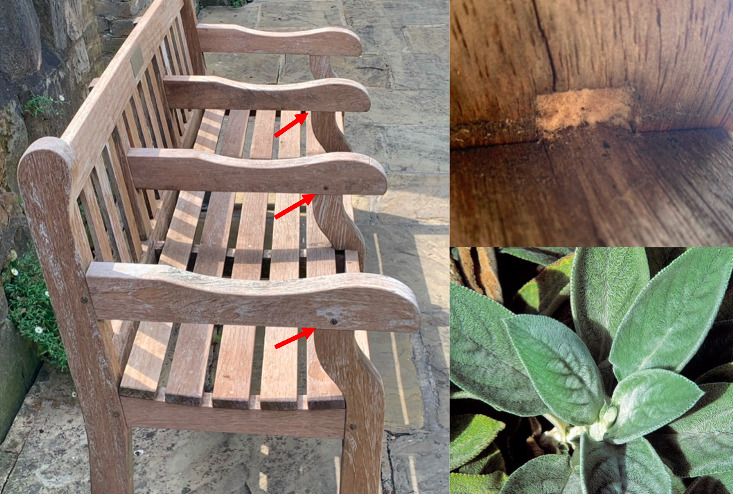
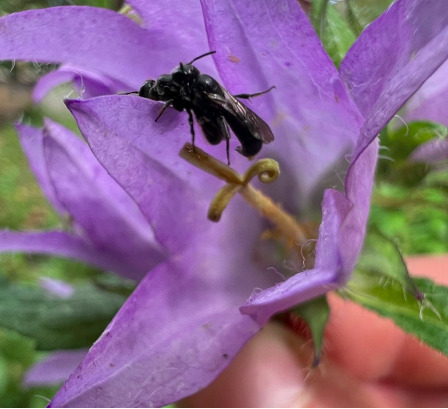
Fortunately, it’s not all bad news. We are still finding specialist and charismatic wild pollinators in unexpected places. Harebell carpenter bees have been recorded nesting in standing dead wood at Bunhill Fields Burial Ground. Wool carder bees have been found nesting in wooden benches at Christchurch Greyfriars. Great examples of how even small urban features can provide critical habitat. These findings show that when urban green spaces are managed thoughtfully, they can support remarkable biodiversity. Continued monitoring will help ensure that future decisions are guided by evidence, and that London remains a city where pollinators can thrive.