Briefing Note for City of London Livery Climate Change Group
Dr Heather Barrett-Mold OBE
There are two major planetary emergencies: climate change and biodiversity loss. Both need urgent attention. Greenspaces can help with both as well as promoting wellbeing. It is clear from the pressures of the COVID-19 pandemic that green spaces are very important to people. There have been numerous surveys which clearly evidence this.
Green Plants and Climate Change
Green plants have a major impact on climate change as during daylight they absorb carbon dioxide from the atmosphere through photosynthesis. Throughout the 24-hour day they respire and produce carbon dioxide but this is a far smaller amount than they take up through photosynthesis. The carbon dioxide they absorb is converted into plant material. In this way they become carbon sinks.
The proportion of photosynthesising material to overall biomass of the plant can be significant. An old tree, for example, may have a smaller proportion of leaves to woody tissue. The carbon stays locked in the woody tissue unless the tree is burned. The decomposition of a dead tree will also release carbon but at a much slower rate whilst also promoting biodiversity. This absorption of carbon by green plants comes under the category of climate change mitigation.
Green Plants and Climate Change Adaptation
Plants also have a major role in climate change adaptation. This category refers to how we accommodate a rise in temperature and other impacts of climate change: significant changes in weather patterns such as storms and resulting flooding, for example. Plants have a cooling effect as they lose water through their leaves (transpiration) and through the shade they provide, not just direct to individuals but to whole buildings. In this way they can reduce the need for air conditioning and the energy that requires. They can temper the heat island effect of concrete and other building materials.

Natural Capital
Natural Capital refers to the world’s natural resources including geology, soils, air, water, and living organisms. We depend on these resources to live and the resulting goods and services are referred to as ecosystem services.
Plants make a major contribution to ecosystem services and as such to resilience. They will lessen the impact of flooding by preventing an unhindered flow of water through for example a concrete gulley.
Cities have traditionally relied on controlling stormwater by draining it through channels but it can cause a range of problems downstream and degrade aquatic habitats. When grey water and sewage are mixed in this process the energy use in treatment increases. Plants though will take up water and release it more slowly. Care is needed however to ensure the right plants are planted in the right place. Green roofs, if well designed, can absorb rainfall and slowly release it whilst also insulating the roof. These nature-based solutions enhance our resilience to climatic extremes while protecting biodiversity.
Biodiversity
Biodiversity relates to the range and quantity of species that maintain a balanced environment. As noted above, nature is critical to our survival: photosynthesising plants provide us with oxygen and regulate our weather patterns. Human activity has altered almost 75 per cent of the earth’s surface, squeezing wildlife and nature into an ever-smaller corner of the planet.
Around one million animal and plant species are threatened with extinction – many within decades – according to the 2019 Global Assessment Report on Biodiversity and Ecosystem Service – Intergovernmental Science-Policy Platform on Biodiversity and Ecosystem Services (IPBES) The report called for transformative changes to restore and protect nature. It found that the health of ecosystems on which we and all other species depend is deteriorating more rapidly than ever, affecting the very foundations of our economies, livelihoods, food security, health and quality of life worldwide.
The loss of biodiversity has led DEFRA to respond through an initiative called Biodiversity Net Gain, in which any development should leave biodiversity in a better state than before, although this may involve mitigation in another place to that of the development.
Health
We need green spaces for good mental health and for the impact they can have on air quality. Research over years has shown the impact of green spaces on health. Reductions in stress and anxiety can be measured through positive changes to blood pressure, pulse rate, and other physiological factors and can be achieved within five minutes when viewing green landscapes.
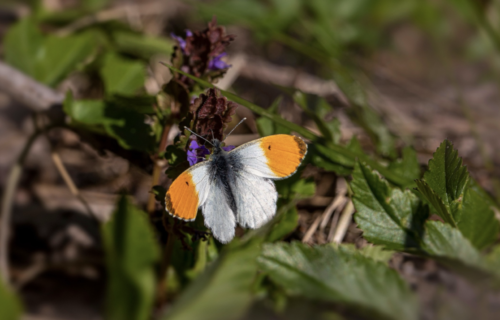
Hospital patients with a view of green space suffer less pain and recover more rapidly. Their requirement for medium to strong pain-killing drugs can be reduced by 25% (Health &Wellbeing Greener Planning Greener UK). Some of the elements which may contribute to this are the noise buffering found in green spaces, improved air quality, the triggers of scent and colour to emotion, pleasant sounds such as the flow of water or bird song and the sense of awe when your thoughts are captured by something which demands your sole attention, for example watching a butterfly. This latter factor is also known as the attention restoration theory (Kaplan) and it suggests that mental fatigue and concentration can be improved by time spent looking at nature.
Designing Green Spaces
- Some formal/informal seating to enable those entering a garden to enjoy the peace, the colour, the scents and the sense of awe. Informal seating could be just the side of a raised bed.
- Avoid using pesticides.
- If providing a border with a hedge then something which is fairly dense and which has textured leaves is more likely to help with air pollution. A hedge will at the same time as providing a good habitat for insects and birds also help with reducing noise from outside the garden.
- A mixture of shade and sun provides a range of habitats.
- Make water available for birds and insects – as easy as a bowl with pebbles and water which almost covers the pebbles. If possible, a small water feature may also give the sound of water flowing.
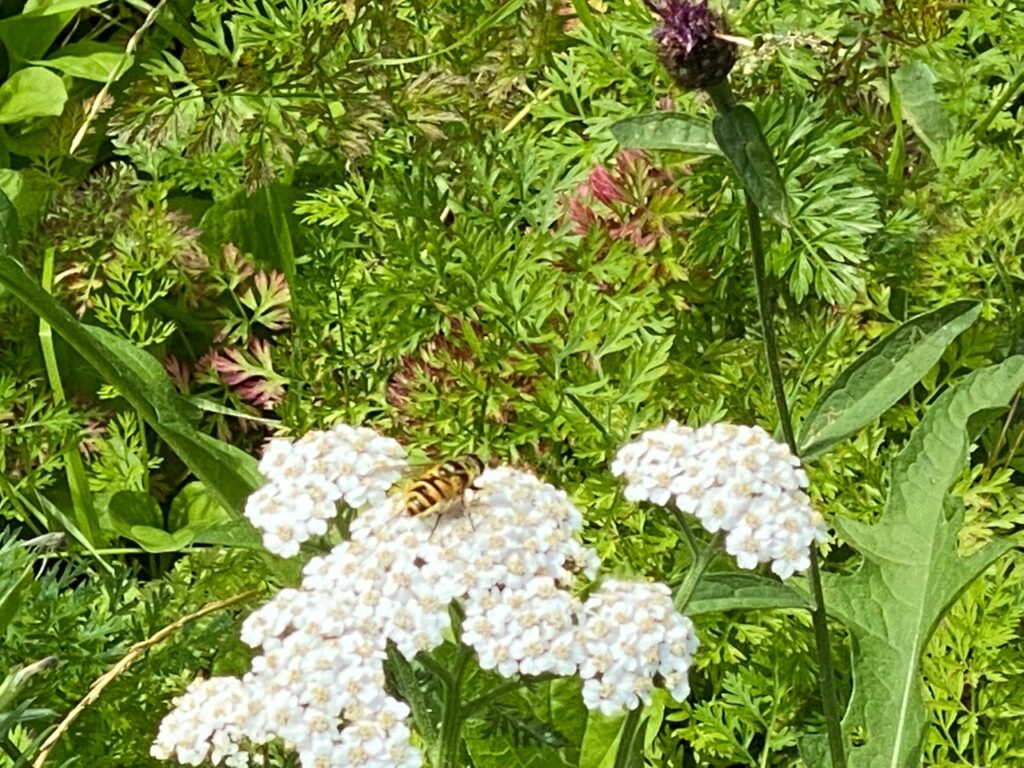
- No matter what the size of your garden or window box, you can do your bit for pollinators. For example, by planting at least two kinds of bee-friendly flower for every flowering period. Bee-friendly flowers are rich in pollen and nectar which bees can easily access throughout the year. All bees, bumblebees, honeybees and solitary bees will benefit from this. The best habitats for bees are those that offer plenty of flowers to feed on during the entire active phase of the bees’ lifecycle (from March until October). This will ensure that there is a good supply of pollen at all of the crucial times.
- You may like to introduce a bee box to help with nesting sites for wild bees. At present in the City there are too many honeybee colonies and not enough forage and as a result they are likely to compete with the wild pollinators potentially reducing biodiversity in this area.
- Make best use of space for the right sort of plants: reduce any hardstanding and close-cut grass areas. Use the space for planting. Replacing hardstanding with gravel supports better drainage.
- Ensure there is food for birds whether bought-in seeds or fruit and berries.
- On the Pollinating London Together website there are suggestions regarding plants that could provide pollinators with forage throughout the year. The shrubs in this list have been chosen primarily for their ability to allow access to nectar and pollen but also because they are suited to urban areas and don’t need undue care and attention.
- Avoid highly cultivated bedding plants such as pansies as they often provide little forage.
- Choose plants that are well suited to the conditions and that don’t require excessive watering.