PLT celebrating Bees Needs Week at Kew Gardens with the University of Reading
Bees Needs Week is an annual initiative coordinated by the Department of the Environment, Food and Rural Affairs (DEFRA) highlighting the importance of bees and other pollinators to our ecosystem. On 9 July, together with our partners, the University of Reading and the Centre for Ecology and Hydrology, we hosted an event at Kew Gardens, combining education, fun, and hands-on activities, all designed to deepen our understanding and appreciation of these incredible creatures.
The diversity of bee species at Kew Gardens
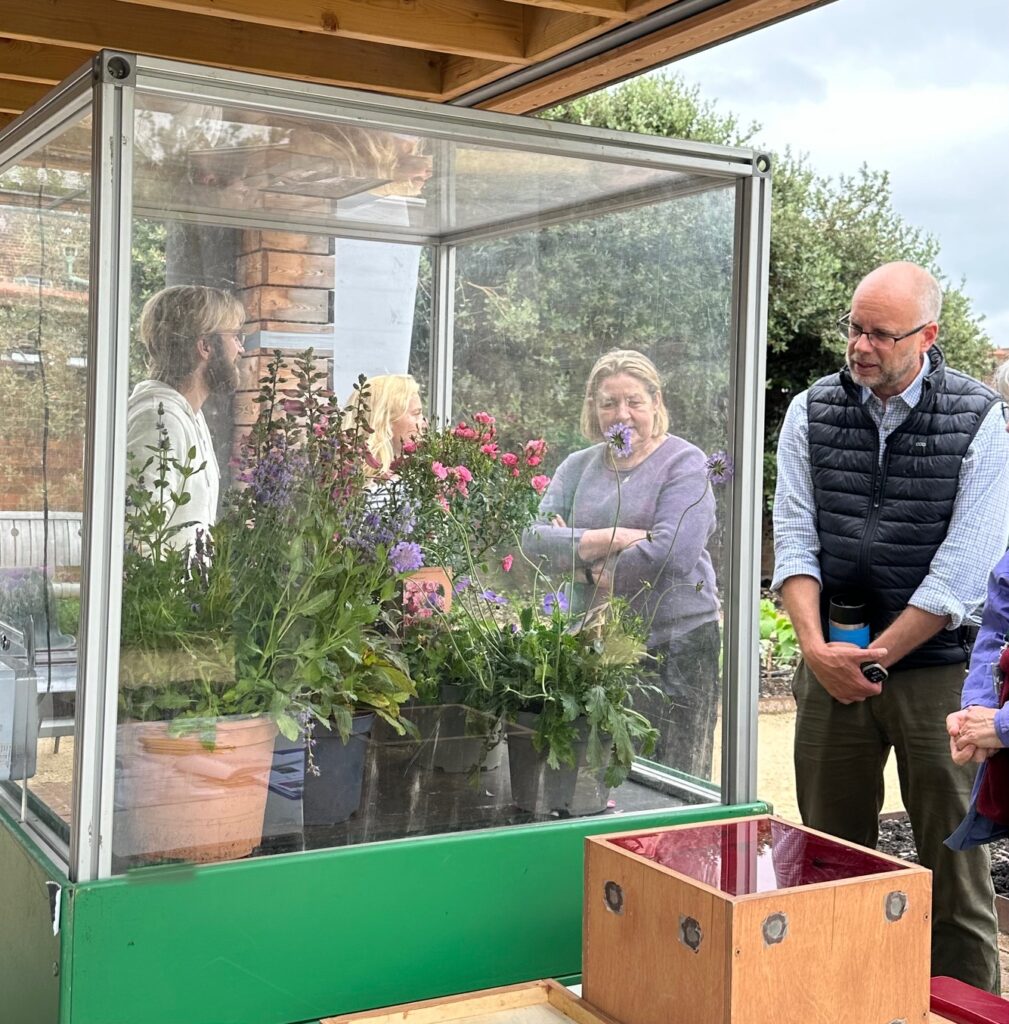
Kew Gardens is not just a botanical paradise, it’s also a haven for a diverse range of bee species. With its expansive collection of plants from around the world, Kew has seen 109 species of bee visit their flowers – more species than have been recorded across the whole of Ireland. During the event, visitors had the opportunity to visit Kew’s ‘Bumblelarium’, a space where they could watch insect behaviour, learning more about their contributions to maintaining healthy ecosystems and sustainable food production.
Exploring the Kitchen Gardens
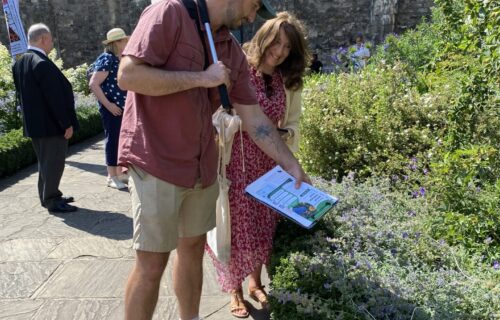
The event took place in Kew’s Kitchen Gardens, which showcase the best in sustainable gardening practices and demonstrate how home gardeners can create bee-friendly spaces. By planting a range of flowers and crops that bloom at different times of the year, gardeners can provide a continuous food source for bees and other pollinators. This is crucial as most insects only live for a few weeks, and different species have their flight periods at different times of year.
Engaging activities: FIT Counts and the Pollinator Shopping game
The event featured several interactive activities designed to engage attendees of all ages, including the Pollinator Shopping game, which aims to educate participants on the products they use in their everyday life which depend on pollinators. Players selected products and used a bar code scanner to simulate the check-out at a supermarket. It highlighted how many different products rely on pollination, such as chocolate bars and vanilla ice cream.

The Bumblearium: a close-up look at Bumblebee life
The Bumblearium is a specially designed enclosure allowing visitors to observe bumblebees in action. Usually, it provides visitors with an up-close look into the daily lives of bumblebees, including their foraging behaviours and floral preferences. But the wet and windy conditions on the day meant that our bees were not particularly active.
Conclusion
This event was a microcosm of the broader goals of Bees Needs Week. By bringing together experts, researchers, and the public, it fostered a deeper understanding of the challenges facing pollinators and the steps we can all take to help. Bees play an essential role in pollinating many of the crops we rely on for food, and their decline poses a significant threat to global food security.
Protecting our pollinators is a collective responsibility. As we continue to face environmental challenges, initiatives like Bees Needs Week remind us of the critical connections between human activity, biodiversity, and the health of our planet. By supporting and protecting pollinators, we are not only ensuring their survival but also safeguarding our own future.