The Giant Blue Morpho (Morpho didius)
This year on the 20th of January it will supposedly be the most depressing day of the year in the Northern Hemisphere. Every year, the third Monday of January has been dubbed “Blue Monday”. The term originated in 2005 when a UK-based travel company promoted it as part of a marketing campaign. They claimed to have calculated the gloomiest day of the year using a formula that factored in weather conditions, post-holiday debt, failing New Year’s resolutions, low motivation levels, time since Christmas, and the “feeling of a need to take action.” While the science behind this calculation has been debunked as pseudoscience, the concept stuck, likely because it taps into a shared feeling many experience during this time of year.
However, while the origins of Blue Monday are rooted in clever marketing rather than clinical research, the feelings of low mood it points to are very real for many people. The days are still short, with long stretches of grey skies and minimal sunshine. Seasonal Affective Disorder (SAD), financial stress, and the winter blues can combine to make this time of year challenging.
People have found uplifting ways to reinterpret Blue Monday. One trend that has gained traction is posting images of blue insects on social media. These posts highlight stunning creatures like blue butterflies, beetles and bees, showing that blue doesn’t have to mean sad. Save your boring vertebrates for another day.
The giant blue morpho (Morpho didius) is one of the largest butterflies on the planet. Their blue colour is thought to make them more attractive to potential mates. Males are very territorial and will be drawn to blue objects in their habitat. The blue of the Morpho butterfly isn’t actually blue. At least, not in the way we think of colour. This is due to structural colouration, where microscopic ridges on their wings bend light to create the illusion of blue. The fact that this butterfly is not blue, just looks blue, is incredibly boring to your author.
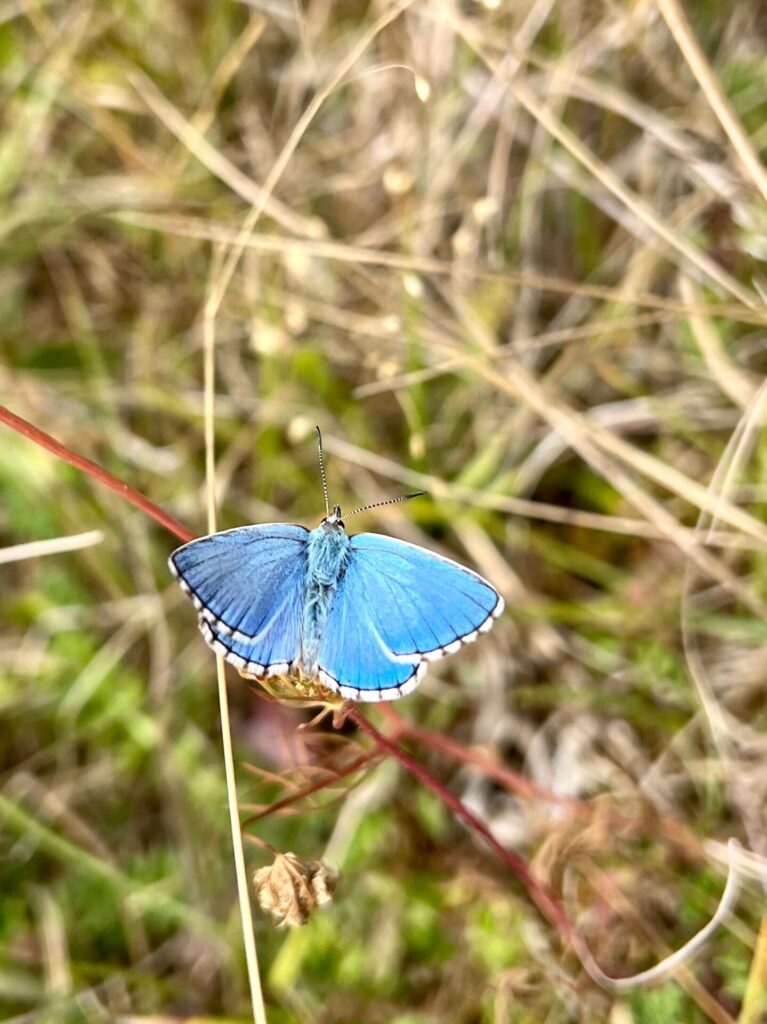
A more local blue butterfly is the Adonis blue (Polyommatus bellargus). Their lifecycle depends on ants and calcareous grassland. Females lay eggs exclusively on horseshoe vetch. The caterpillar gets tended by ants because of their sugary secretions. They are known to pupate in ant nests, where the ants continue to take care of it until they emerge as an adult butterfly.
Whether or not Blue Monday is the “most depressing day”, the day offers a reminder to check in with ourselves and others. If you’re feeling low, it’s okay to acknowledge those feelings and seek support. Brightening the day for others, whether by sharing something beautiful or simply lending a listening ear, can also make a difference. While January may feel heavy, spring is just around the corner, and with it comes brighter days.