On a sunny day, butterflies are among the easiest insects to notice. A flash of orange from a Comma, the red bands of a Red Admiral, a yellow Brimstone drifting over a hedge, or the eyespots of a Peacock can make any green space that much more enjoyable. But butterflies are more than attractive garden visitors. They are pollinators, food for other wildlife, and indicators of environmental change. Because they are relatively easy to identify and have been recorded for centuries, they also give us a valuable window into how Britain’s insect life is changing.
Butterflies and moths both belong to the insect order Lepidoptera, meaning “scaly wings”. Those tiny scales cover their wings like overlapping tiles, creating the colours and patterns we use to identify different species. Like moths, butterflies undergo complete metamorphosis: egg, caterpillar, chrysalis and adult. The caterpillar stage is all about feeding and growing, while the adult stage is largely about reproduction and dispersal. This life cycle means butterflies need more than flowers. Adults may depend on nectar-rich plants, but their caterpillars need specific foodplants. A garden full of flowers might feed adult butterflies, but without suitable plants for caterpillars, it cannot support the next generation.
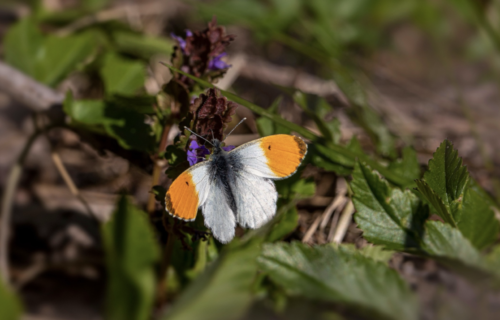
Orange-tips are a good example. Adults visit flowers such as dandelions and bramble, while their caterpillars feed on plants including cuckooflower and garlic mustard. Creating habitat for butterflies therefore means thinking about the whole life cycle, not just the colourful adults we see visiting flowers. Many familiar species, including Peacocks, Red Admirals, Brimstones, Commas, Speckled Woods, Meadow Browns and Orange-tips, are regular visitors to gardens and other urban green spaces. But familiar does not necessarily mean safe. Butterfly numbers naturally fluctuate from year to year, often in response to weather, but longer-term trends are more concerning. The UK Butterfly Monitoring Scheme has recorded butterflies at thousands of sites since 1976, providing one of the longest-running datasets on insect populations. Its data show declines in many species, while Butterfly Conservation reports that 80% of UK butterfly species have declined in abundance, distribution, or both since 1976.
The fortunes of individual species can also change dramatically. The Speckled Wood has expanded strongly in recent decades, while the Comma has made a notable comeback and continues to spread northwards. Meanwhile, the Small Tortoiseshell, a classic garden butterfly, has experienced substantial declines. Climate change is also reshaping Britain’s butterfly fauna. Southern species are increasingly appearing further north, while some migrants are becoming more frequent. These new arrivals can be exciting, but they are part of a much larger reshuffling of wildlife as temperatures and habitats change.
How can we help?
The best butterfly-friendly spaces provide for every stage of the life cycle. Planting nectar-rich flowers is important, but so is providing caterpillar foodplants. Native wildflowers, longer grass, patches of nettles, sheltered sunny areas and late-season flowers such as ivy can all provide valuable resources. Avoiding pesticides can help too.
A slightly messy garden can often be a much better garden for insects. Butterflies need flowers, leaves, shelter, warmth and places to overwinter. So next time you spot a butterfly, take a moment to look closely. It might be one of Britain’s most familiar species, a migrant arriving from elsewhere, or a species whose fortunes are changing before our eyes. Either way, that small flash of colour is part of a much bigger story about pollinators, habitat and our changing environment.