

Balcony Gardening for Pollinators
Enhancing green spaces in London where all natural pollinators can thrive, and their habitats can be enjoyed by all.
Balcony Gardening for Pollinators
Overview
You do not need a garden to support pollinators. Balconies, windowsills and small terraces can provide essential feeding stops for insects travelling through cities. Urban surveys have recorded pollinators visiting plants several storeys above ground, demonstrating just how adaptable they are.
Why Balconies Matter
Balcony planting acts as a stepping stone between larger habitats, provides nectar sources in dense urban areas where green space is scarce, and helps connect pollinator pathways across a city. Even a single well-planted window box can contribute to the wider network.
Best Plants for Balconies
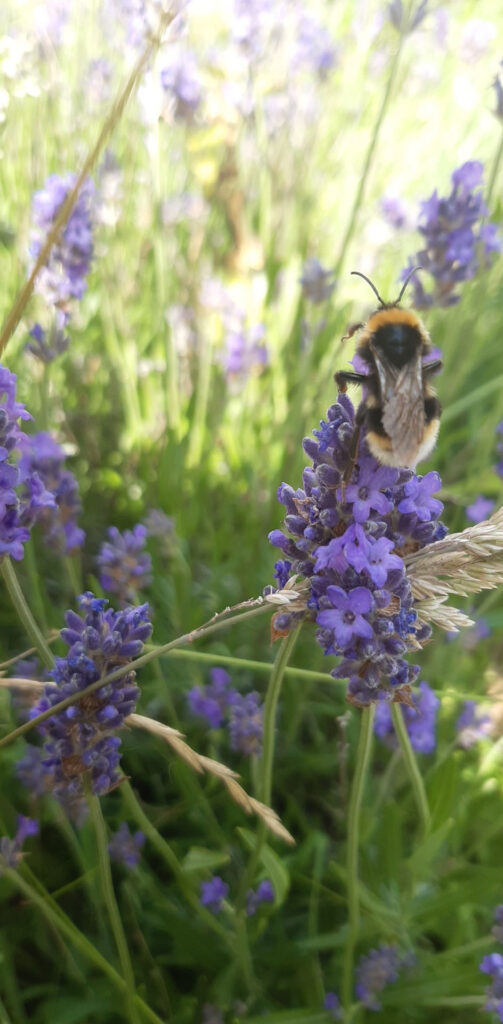
- Lavender (Lavandula angustifolia)
- Thyme (Thymus vulgaris or Thymus polytrichus for a wilder form)
- Marjoram — choose wild marjoram (Origanum vulgare) rather than ornamental cultivars, which have lower pollinator value
- Verbena bonariensis (tall verbena) — specify this species rather than bedding verbena hybrids, which offer limited pollinator benefit
- Sedum (ice plant, Hylotelephium spectabile) — excellent late-season value
- Scabious (Scabiosa or Knautia species)
- Compact native wildflowers such as cornflower (Centaurea cyanus), bird’s-foot trefoil (Lotus corniculatus) or wild thyme
Choose plants that flower at different times of year to provide continuity from early spring through to autumn.
Container Planting Tips
- Use deep pots to allow adequate root development — shallow containers dry out quickly and limit plant health
- Ensure good drainage to prevent waterlogging, which stresses most pollinator plants
- Use peat-free compost — peat extraction damages important wetland habitats
- Water regularly in hot weather, particularly for terracotta pots which dry out faster
- Group plants together to create a more visible and rewarding foraging patch for insects
Design Tips
- Mix heights and textures to create a more varied and visually interesting display
- Avoid double-flowered varieties — the extra petals that give them their full appearance typically obstruct or eliminate access to nectar and pollen, rendering the flower useless to pollinators
- Include flowering herbs, many of which are highly attractive to pollinators as well as useful in the kitchen
- Position plants in the sunniest available spot — most pollinator-friendly plants prefer full sun
Extra Features to Add
- A shallow water dish with pebbles or stones — the stones give insects a safe landing point and prevent drowning. Change the water regularly to prevent mosquito breeding.
- A small bundle of hollow stems or a compact bee hotel placed in a sheltered, south-facing position — this can support cavity-nesting solitary bees such as red mason bees and leafcutter bees. Note that bee hotels support only cavity-nesting species; the majority of UK bee species nest in the ground and will not use them.
- A small log or piece of bark as shelter and microhabitat