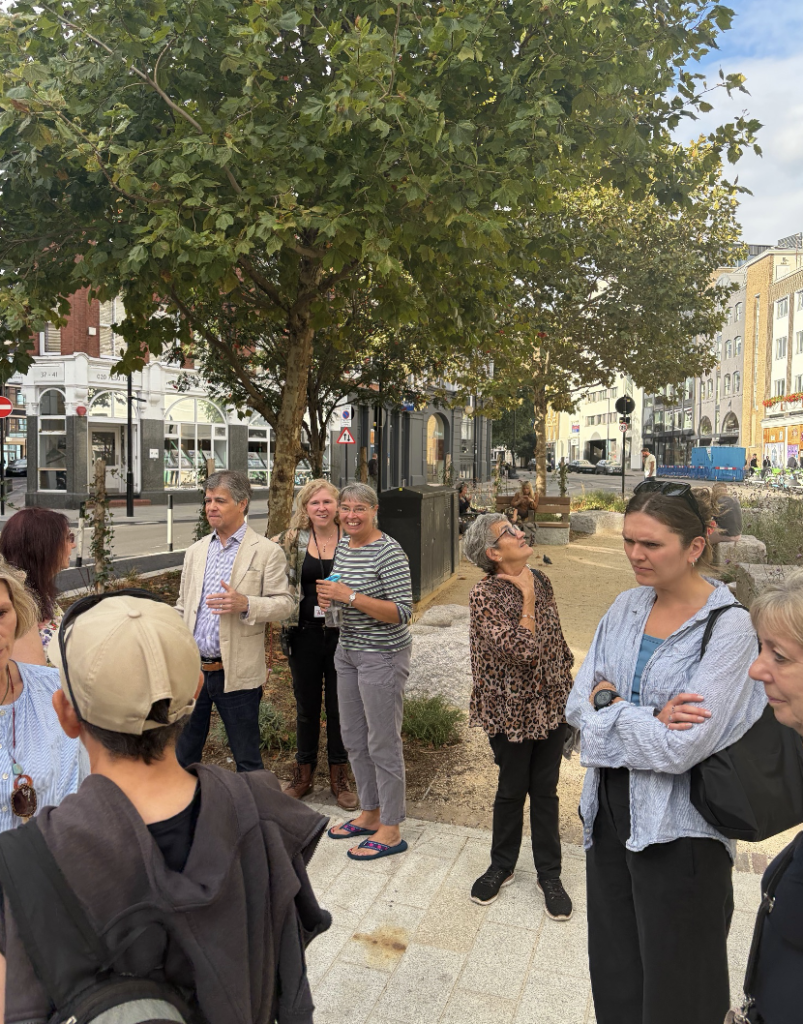
On a warm September day, a group of 13 joined Pollinating London Together for a fascinating visit to Clerkenwell to discover how the Clerkenwell Pollinator Pathway Project is bringing nature into the heart of the city while strengthening local communities.
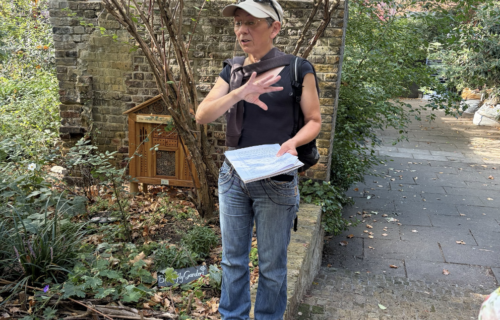
Meeting in St John’s Gardens, close to Farringdon station, we were welcomed by our guides, Susanna Thornton and Alex Forbes, who introduced us to the history of the gardens and the inspiring community-led work taking place to support urban biodiversity.
Growing a stronger community through nature
In one of London’s most densely built-up neighbourhoods, the Pollinator Pathway Project is demonstrating how small green spaces can make a big difference, not only for wildlife but also for the people who live and work nearby.
Through collaboration with the local community and support from Pollinating London Together, the project is helping to create greener spaces while encouraging people to take an active role in caring for their surroundings.
Community involvement takes many forms. One local resident regularly carries out a quick litter pick on her way to work, while organised community working days bring people together to maintain and improve their green spaces. Activities are designed to accommodate different ages and abilities, making it easier for people to get involved.
These seemingly small contributions add up to something much bigger: a shared sense of ownership, pride and connection in the neighbourhood.
Turning streets into green oasis
Our walk continued to a newly created garden, developed from an overly wide section of street. The space is intended to become part of a wider network of pocket parks, planted areas and flower beds that will bring nature into the urban environment.
The garden offered a welcome oasis of calm amid the surrounding streets. Benches provided places to pause and relax, and were already well used during our visit. The space felt like more than a garden; it was becoming a natural meeting point for the local community.
We also heard how people working in nearby offices are getting involved. One local office receptionist has taken responsibility for caring for a raised flower bed outside her workplace, showing how everyone can play a part in creating a greener neighbourhood.
These examples demonstrate that improving urban biodiversity does not always require large-scale interventions. With the right support and community involvement, even small, overlooked spaces can be transformed into valuable habitats for pollinators and welcoming places for people.
A garden with a fascinating history
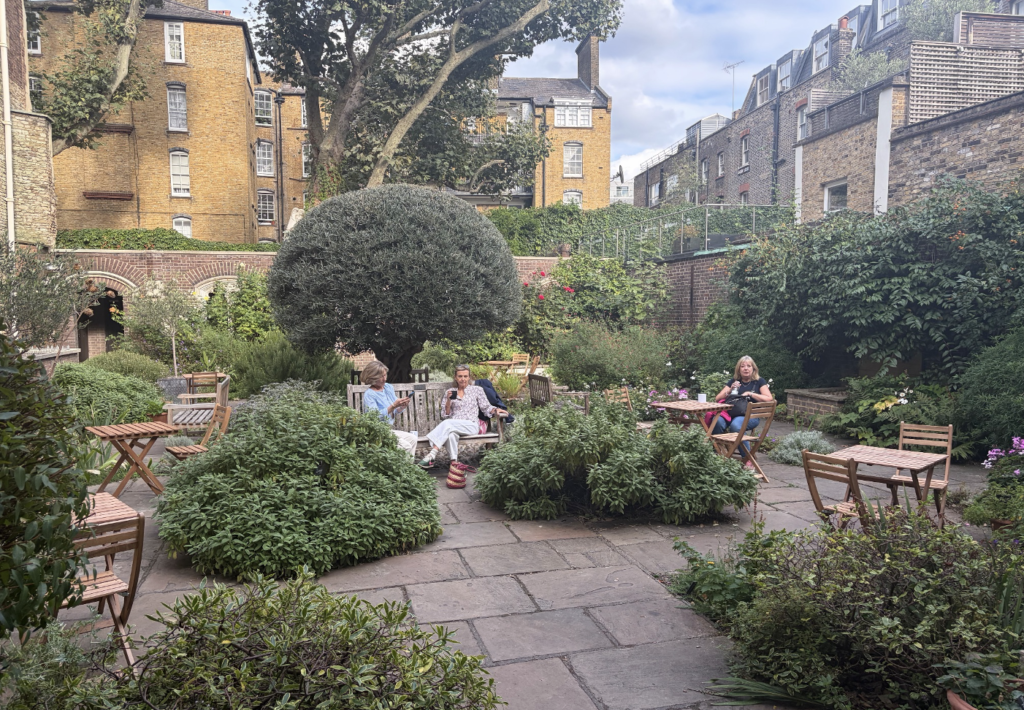
Alex Forbes also introduced us to her work caring for St John’s Gardens, a Physic garden with links to the historic work of the Order of St John.
Physic gardens were traditionally used to grow plants for medicinal purposes, connecting the cultivation of plants with the care of people. This heritage provided a fascinating backdrop to our visit, highlighting the long-standing relationship between plants, wellbeing and the urban environment.
Alex kindly provided us with a refreshing cup of tea and a chance to reflect on what we had seen. Our conversations ranged from the practicalities of maintaining urban green spaces to the importance of community engagement and the wider challenges facing biodiversity.
We finished the visit by splitting into two groups to explore the fascinating history of St John’s and visit the church, adding another layer of historical context to an already inspiring day.
Creating greener, more resilient cities
As we thanked our hosts and made our way home, we were struck by the strength of community involvement and the transformation taking place across Clerkenwell.
The Pollinator Pathway Project illustrates how urban green spaces can help address two major challenges of our time: climate change and biodiversity loss. By introducing planting, creating connected habitats and encouraging local people to participate, the project is helping to make streets greener, more welcoming and better equipped to support wildlife.
The visit also brought to mind our trip to Thamesmead earlier in the summer, where we explored how the urban environment can be developed to better accommodate nature and people.
Both visits demonstrated that improving biodiversity in our towns and cities is about more than planting flowers. It requires collaboration, long-term commitment and a recognition that green spaces can bring communities together as well as support wildlife.
The Clerkenwell visit was a wonderful reminder that every green space counts. From a single raised flower bed to a network of pocket parks, local action can help create healthier, more biodiverse and more connected urban neighbourhoods.
Pollinating London Together is proud to support initiatives that demonstrate what can be achieved when communities work together to give urban pollinators the spaces they need to thrive.