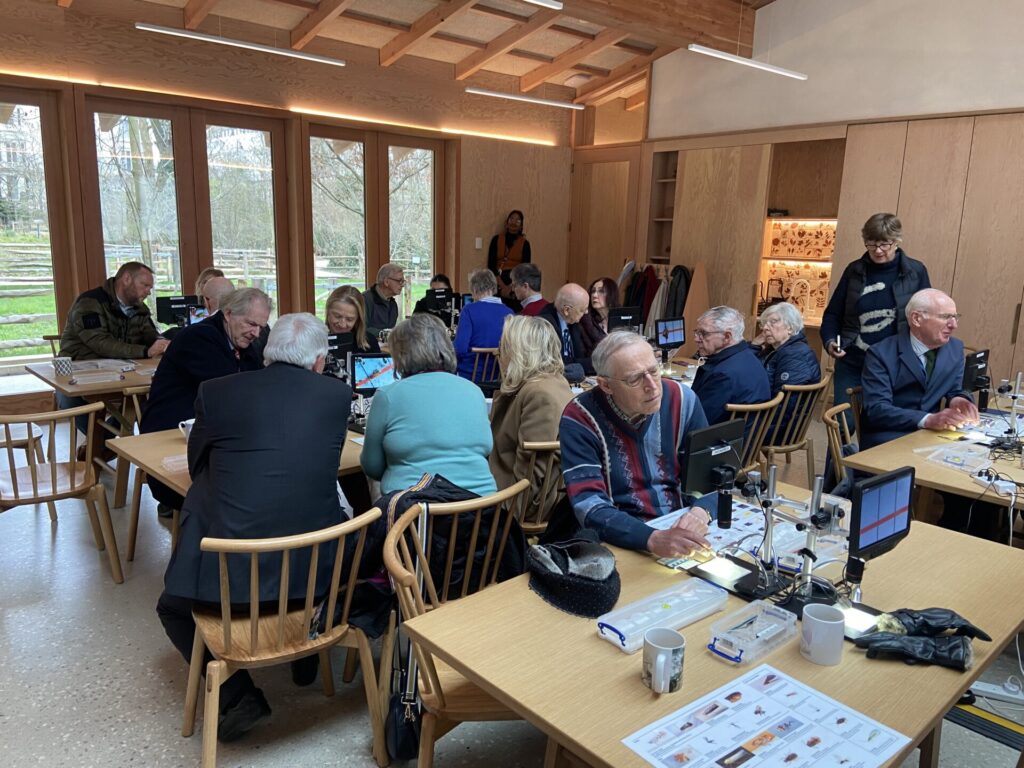
On March 12th, a group of Pollinating London Together (PLT), supporters, members and volunteers had the pleasure of spending an engaging and educational afternoon at the Natural History Museum (NHM) in London.
The experience offered a fresh perspective on the natural world, combining beautiful outdoor exploration with hands-on science indoors.
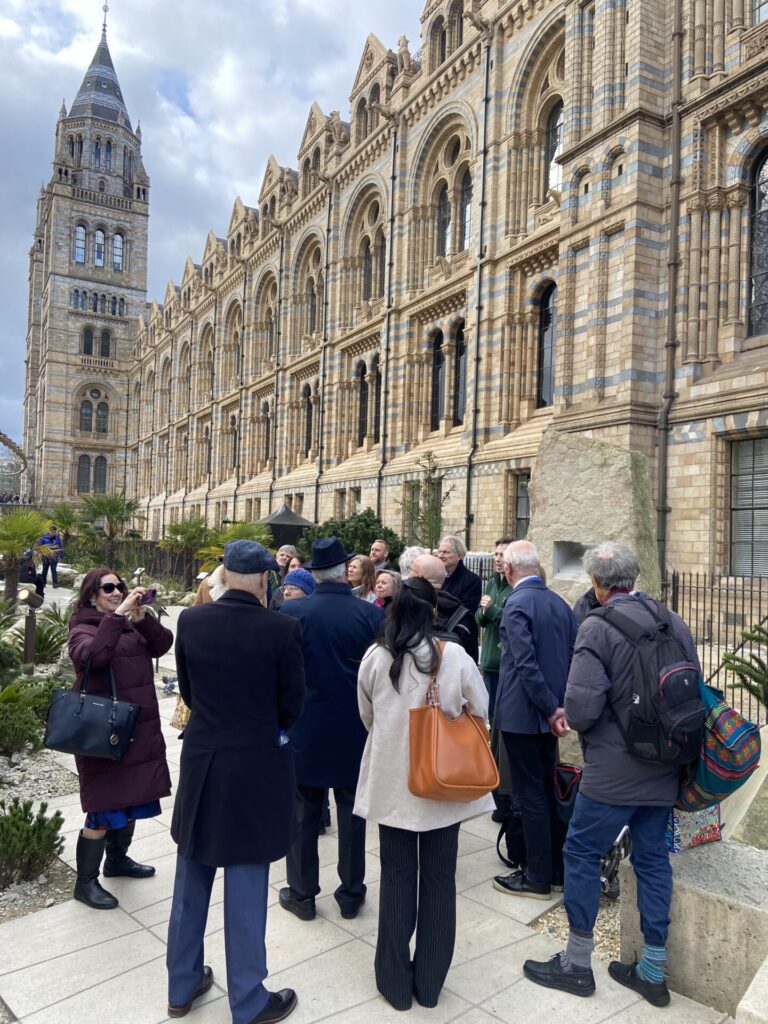
We began with a tour of the museum’s newly landscaped gardens, led by the NHM knowledgeable head gardener.
The start of the gardens by the TFL tunnel to the tube are thoughtfully designed to follow the timeline of evolution, complete with stone paths taking you through a geological timeline from the oldest rocks in the UK to the present day. These rocks are more than 2.7 billion years old! The pathway leads through different rocks, each associated with a different time period, starting with the Cambrian Period around 450 millions years ago, moving through different period of time until present.
Moving along the path you come across fossils, footprints and sculptures of different animals big and small including the large bronze statue of Fern the Diplodocus.
As we moved further, the landscape transformed into representations of modern-day forests, grasslands, and ponds, to the Nature Discovery Garden — teeming with toad spawn during our visit — demonstrating how nature can thrive even in urban environments. The Nature Discovery Garden is a living laboratory where scientists are studying how urban nature is responding to change.
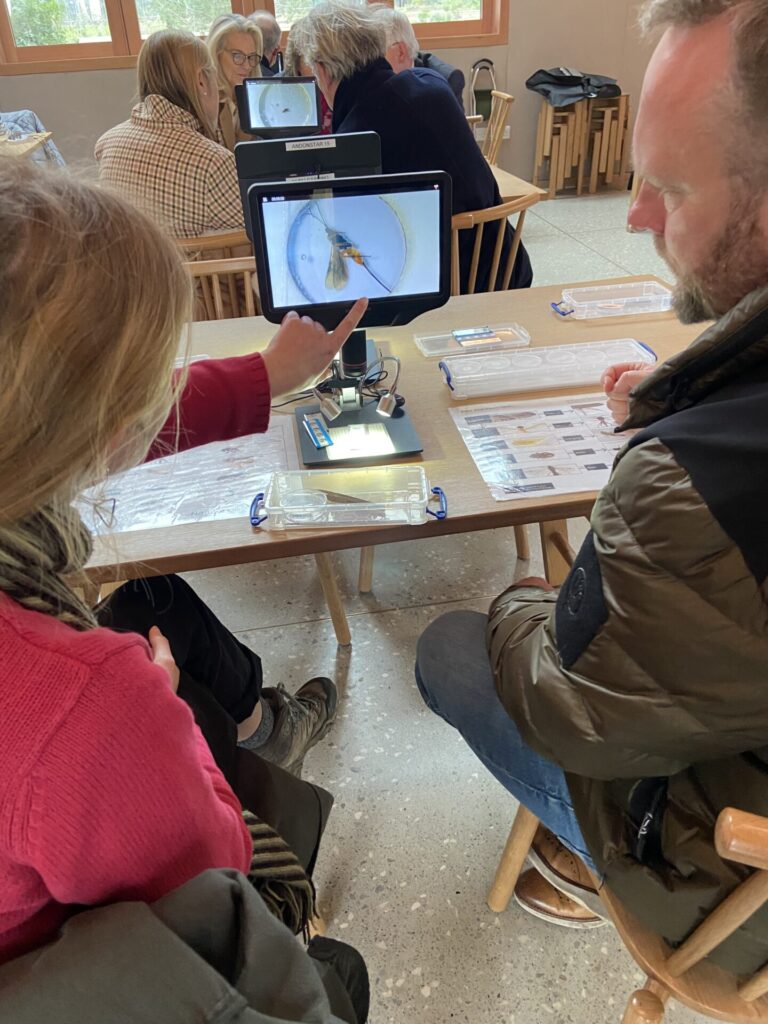
After exploring the gardens, we headed inside to the newly opened Nature Activity Centre for a much-needed cup of tea before starting the ‘Biodiversity in Action’ session. In small groups, we delved into a practical science workshop, guided by the knowledgeable NHM team. Using microscopes and classification charts, we examined real insect samples, identifying and sorting them into different categories. Our new skills were put to the test as we worked through an ecological problem-solving scenario for a strawberry farmer facing pest issues. It felt like being back at school, but with an added element of excitement. The experience left everyone engaged and inspired!
Many thanks to the Natural History Museum and their staff. It was a memorable and educational experience.