A visit to the Natural History Museum’s Wildlife Garden
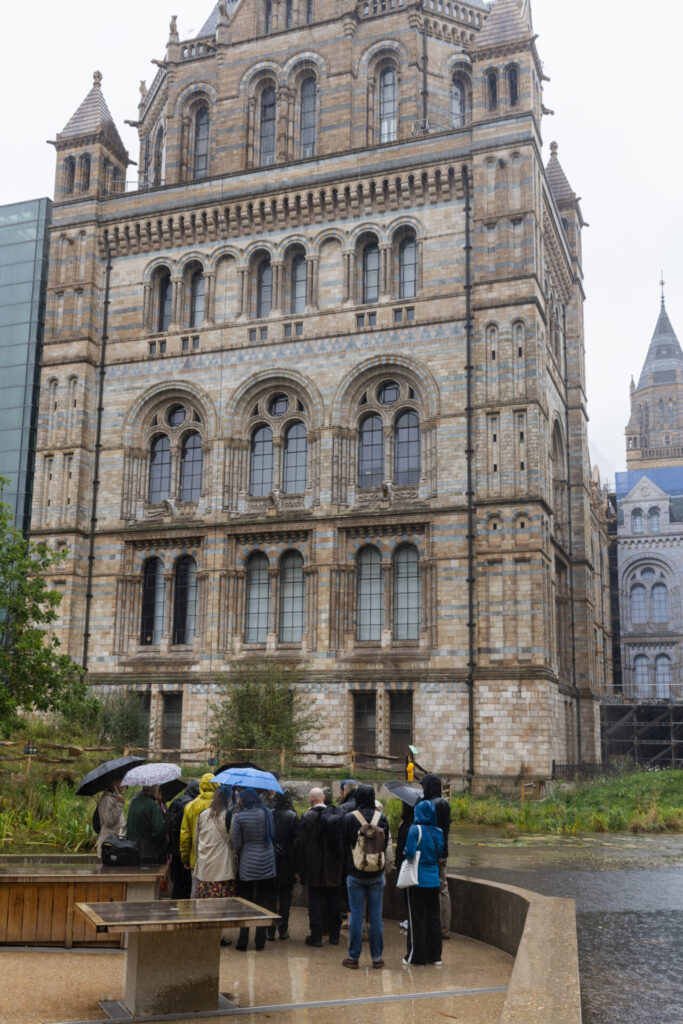
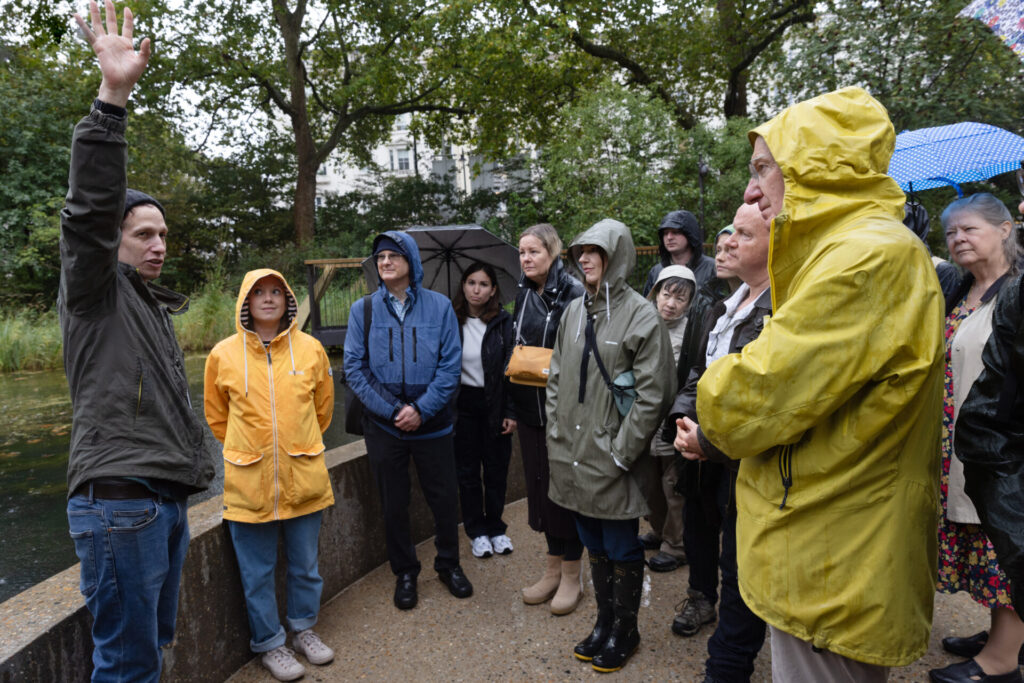
Earlier this month, our group of Pollinating London Together members had the chance to visit the Natural History Museum’s (NHM) wildlife garden, guided by the museum’s naturalists. Despite the rain, the experience was refreshing and inspiring, offering a glimpse into the museum’s approach to creating and restoring wildlife habitats. Tucked away from the bustle of central London, this green space is a living, evolving ecosystem right in the heart of the city.
The ponds in the wildlife garden provide essential habitats for diverse species, including amphibians, insects, and bats. The ponds are designed to support biodiversity, with willow trees specifically maintained to encourage the rare willow emerald damselfly. Toads and smooth newts also thrive, and dark spaces are preserved for bats. The ponds are part of the museum’s efforts to boost urban wildlife, while innovative monitoring projects help study species interactions. We were pleased to see a bee hotel among the garden’s structures
The space the wildlife garden occupies has an interesting past. During World War I, the land was converted into allotments to support the war effort. It was once a burial ground for whales, where large skeletons were interred during the museum’s early years in order to clean the bones for the museum’s collection. It wasn’t until more recent decades (1995) that the NHM decided to turn it into a wildlife garden, a testament to the evolving relationship between the museum and urban nature. The museum gardens are visited annually by sheep to graze on the diverse grassland. However, due to ongoing construction on the building, the sheep have not been able to visit in recent times. Grazing animals play a crucial role in maintaining grassland biodiversity by preventing the dominance of certain plant species, so their absence was keenly felt.
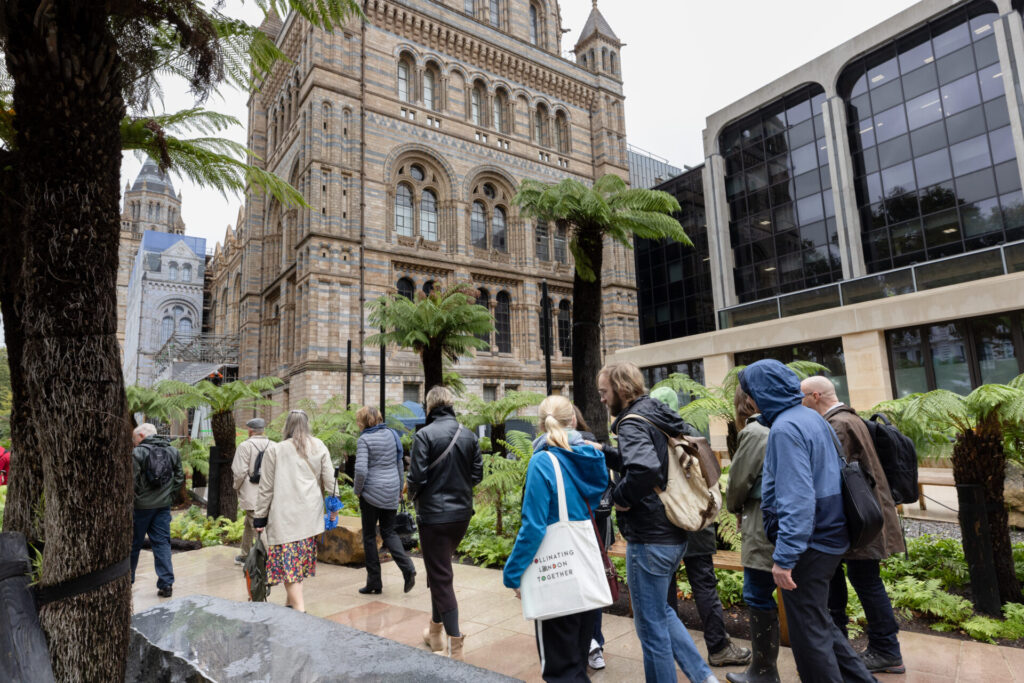
On the other side of the wildlife garden lies the Evolution Garden, which feels like stepping into another era. Towering tree ferns, relics of ancient ecosystems, provide a stark contrast to the urban backdrop. Fern, a bronze cast of Dippy the Diplodocus stands at the centre looking over the guests. The aggregate path that runs through the evolution garden is another highlight. It takes visitors on a journey through geological time, from ancient periods to the Anthropocene. Embedded within the path are materials symbolic of the modern age, including pottery and plastics, a subtle reminder of humanity’s impact on the planet.
Over a lovely lunch, we were told about the National Education Nature Park initiative, a project led by the museum. Through it, schools can apply to turn unused spaces into biodiversity-friendly habitats, helping students learn about sustainability. Participating schools are encouraged to assess which habitat types present on their site, and which might be good to introduce. All schools, nurseries and colleges in England can join the National Education Nature Park. The programme and all associated resources are for all education settings, regardless of the amount of outdoor or green space on their site.
https://www.educationnaturepark.org.uk/faqs#:~:text=About,green%20space%20on%20their%20site.