Exploring the Green Transformation of Thamesmead
Our visit plan envisaged a warm summer day, with everyone in shirt sleeves and sunglasses at the ready. During our preparations, we identified the weather as the principal risk, and the forecast certainly supported that assessment. Twenty-four hours before our visit, heavy rain, thunder and lightning were all predicted – not ideal conditions for an outdoor event.
Fortunately, the weather gods smiled on us, and we were rewarded with a bright and sunny morning, albeit with a slight chill in the breeze.
We gathered at The Nest on time and, during introductions, discovered that many attendees had a direct professional interest in the management of urban green spaces. This led to lively discussions from the outset and provided an excellent opportunity to make new connections across the sector.
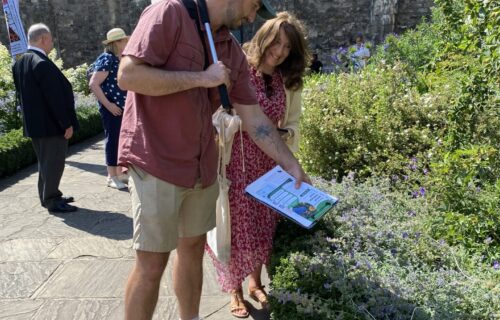
Our guide for the morning was Philip Askew, Landscape Director at Peabody, who provided a fascinating introduction to both the organisation and the scale of Thamesmead itself. Peabody owns and manages much of Thamesmead, an area covering approximately 17.75 square kilometres – larger than Central London – and home to around 45,000 residents. As Thamesmead Garden City continues to develop as one of the Government’s priority Garden City locations, that population is expected to grow to around 100,000.

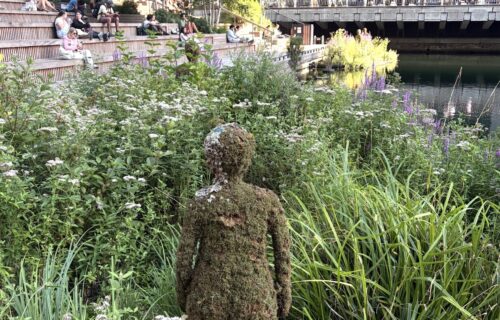
Under Philip’s expert guidance, we began at Southmere Lake, learning how recent enhancements have transformed it into a thriving habitat for wildlife. Newly created floating islands now provide valuable nesting and refuge space for a wide range of bird species, demonstrating how thoughtful design can successfully balance ecology and urban living.
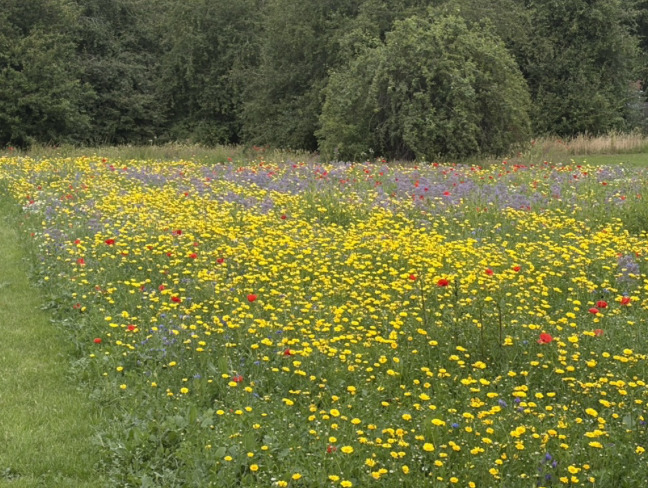
We then toured some of the original three-storey housing developments, where investment in landscape improvements and resident gardens has significantly enhanced the character of the neighbourhood. From there, we visited an area that had previously been maintained as grassland but was replanted with a wildflower seed mix earlier this spring. The result was a spectacular display of colour and an excellent example of how biodiversity can be incorporated into everyday urban spaces.
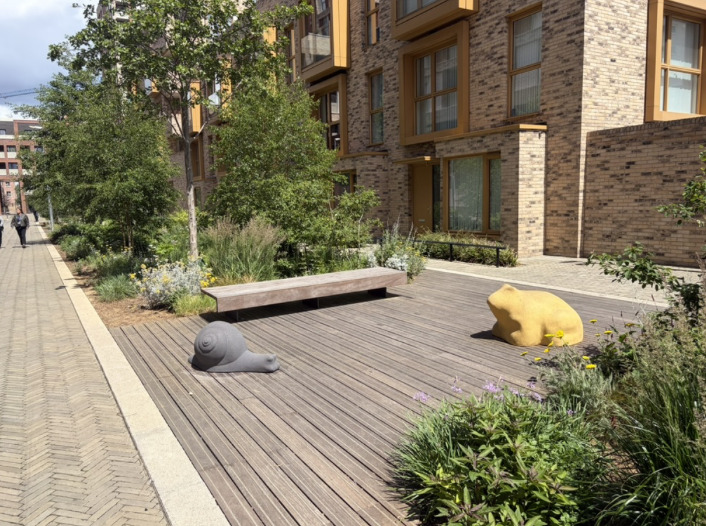
As we made our way back, we viewed several pieces of street art recently commissioned by Peabody. These artworks have helped replace more random graffiti and bring colour, identity and a more human scale to spaces beneath the surrounding highway infrastructure.
Beyond the visual improvements and ecological benefits, our discussions explored the wider value of investing in nature. We considered how high-quality green spaces contribute to neighbourhood desirability, support resident health and wellbeing, and encourage greater use of outdoor environments. We also reflected on the very real challenges posed by climate change, particularly for Thamesmead’s impressive population of more than 50,000 trees, and the importance of selecting species that will be resilient in future climate conditions.
It was an inspiring visit and a powerful demonstration of how landscape-led regeneration can transform communities. Better still, Thamesmead is remarkably accessible – just 15 minutes from Liverpool Street Station via the Elizabeth Line.